Maharashtran Identity
Because Maharashtra is by definition a "linguistic state," its history is best traced through the development and spread of the state's underlying language, Marathi. Equivalently, speakers of the Marathi language collectively constitute the Maratha people, a group that spans across multiple castes but is united by their common language and culture.
Marathi first rose to prominence in medieval India, in the 12th century. It was adopted as the court language by various regional dynasties, and was institutionalized through its use by scholars (ex. Mukundaraja, Chakradhar Swami), religious sects (ex. the Mahanubhava and Varkari panthans), and political rulers (ex. the Seuna kings, the Ahmadnagar Sultanate).
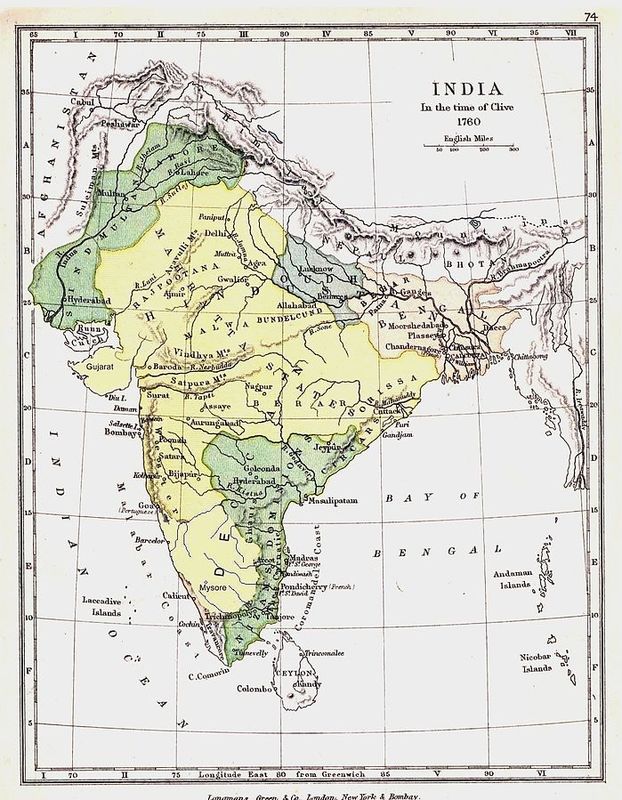
But the Marathi language and the corresponding Maratha peoples most rose to prominence under the Maratha Empire. In 1674, Shivaji Maharaj rebelled against the Mughal Empire to create a rebel state that eventually grew to cover most of modern-day India, effectively ending Mughal rule. The Maratha Empire dissolved in 1818, after the Third Anglo-Maratha War, leaving most of Maratha--and thus India--under British control.
As the Maratha Empire expanded, the Marathi peoples also spread to far corners of the country. As a result, many Marathis remain scattered beyond the current Maharashtra state. Often, these people have retained a surprising amount of Marathi customs in their lifestyle, to this day.
Today, the Marathi people and the state of Maharashtra remain significant and visible, not only because of their rich history and past preeminence, but because they continue to be associated with one of the greatest cities in India: Mumbai.
During the protests leading up to the separation of the Bombay Presidency into the Gujarat and Mahashtra states, one of the arguing points was which state the city of Bombay would be incorporated into. The intuitive and eventual result was for the city to belong to Maharashtra, as both the city and the surrounding lands were majority Marathi.
These high-level, large-scale restructurings are reflective of issues internal to the city. On a high level, the restructuring was an empowering way for national and local politicians to define their nation on their own terms, wiping away the de facto British Bombay Presidency, and creating states that better highlighted the region's natural cultural landscape. Similarly, although Mumbai seated the bulwark of British power during colonial times, the city was also the heart of the Indian independence movement, and has continued to take measures to nationalize its identity, such as by changing the city's name from Bombay to Mumbai.
But the city of Mumbai can also be quite different from the rest of the state, and these differences are often accentuated within the city itself. On the one hand is what is mentioned above: the restructurings arose from a fierce sense of Marathi nationalism, which defended the need to consolidate majority Marathi areas into their own state. But on the other hand, Bombay is in many ways a cosmopolitan, westward-facing global city. The worldliness of a globalized city is often at odds with strictly local nationalism, for these forces subtly compete for the minds and commitments of their subjects.
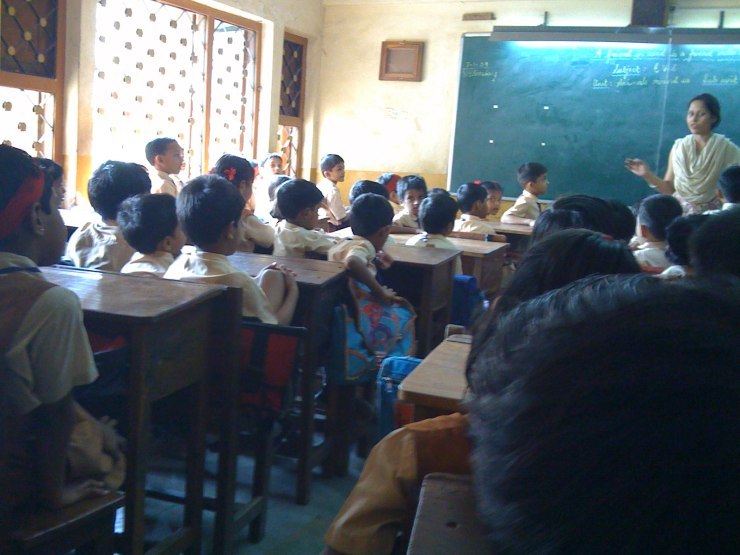
One example of this phenomenon can be found through education. The Maharashtra government defied the national Indian government by insisting on supplementing their statewide school curricula with a mandatory Marathi requirement. And yet, many Mumbai residents are defying this nationalist effort by sending their children to international schools, where only English is taught. This trend, which leaves some worried about the ability for the state's linguistic--and thus cultural--legacy, is perhaps poignantly perfect considering India's democratic credo. No matter how state lines are drawn, both physically and ideologically, citizens (at least, those with the means) have the right to vote--with their feet, and their actions.