Looking for Clues
I learned this history before I traveled, with the intention of finding remnants of the park’s past embedded into the landscape like the rolling hills of World War I battlefields, carved out by bombshells and grown over with grass. There was little clear history, however, besides the brick paths, the metal statues, and the stone elements of the landscape of indeterminate age. The ideas that had been so fiercely debated over the park’s pasts occupied no physical space; the proposed skyscrapers were never built. The only addition to the landscape was the extra air where buildings could have stood, but this too was invisible.
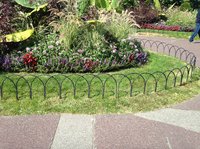
The Public Garden is a biological site, which makes their role as a palimpsest fundamentally different from locations elsewhere in an urban environment. Rather than layers of rubble marking decades of buildings torn down and rebuilt, time flows through the Public Garden like water around stones in a river. Trees and flowers have lifespans just like buildings, but they are replanted without leaving a mark on the park’s timeframe. The Public Garden is a palimpsest that is simultaneously being erased and re-written throughout the year.
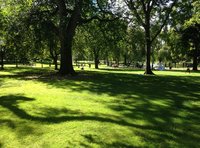
What was clear, however, was the difference between the two parks. One can certainly see that the Public Garden was designed for aesthetic enjoyment. The maps of the two suggest this, as the paths in the Garden are windier and lead between trees and the pond, whereas the Common has straighter paths and wide-open spaces designed more for utilitarianism. The key difference, however, is the human activity in each. It is the people, not the design nor even the flora and fauna, that determine the cultural landscape of the Public Garden.