More than a Battleship
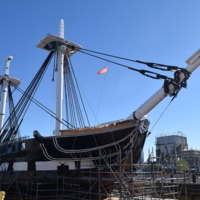
The USS Constitution is of monumental significance to America as an undefeated ship of battle, of diplomacy, of brotherhood, and of continuity starting at the nation’s inception. Today, there is a museum adjacent to it that I went to, full of memorabilia from renovations past and paintings chronicling (victorious) wars past. The ship has plenty of popular culture credibility to it as well - Queen Elizabeth II got a private tour of it in 1976, and Pope Pius IX and King Ferdinand II visited the Constitution in 1849. It was the center of two nation-wide sweeps to salvage the ship from getting scrapped. It has been literally and figuratively in the middle of the action.
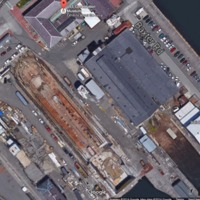
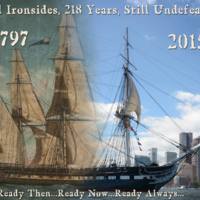
Today it also sits retired in a port in the Charlestown Harbor - an “edge” in Kevin Lynch’s terms - but it wasn’t always so static. The U.S.S. Constitution was successfully launched on October 21, 1797. It was used in the Quasi War with France in 1798, in the war of 1812 to defeat the British Guerriere, HMS Cyane, and HMS Levant. The ship was so well prepared for battle that sailors were shocked to see cannonballs deflected by the thick wooden sides of the boat, that one remarked, “Huzza - her sides are made of iron!”, and thus obtained the nickname “Old Ironsides.”
The U.S.S. Constitution went from being a battleship to a classroom, to a sailor motel, and back to a boat again. It was turned into a Navy school classroom in the 1850s. By the 1880s, the boat had a barn placed over it in order to house sailors and was docked at Portsmouth Navy Yard. By the early 1900s, the ship was restored to its original look, and new masts and rigging were installed.
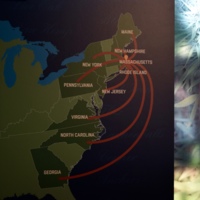
U.S.S. Constitution in Motion