Browse Items (344 total)
- Collection: Mumbai
Sort by:
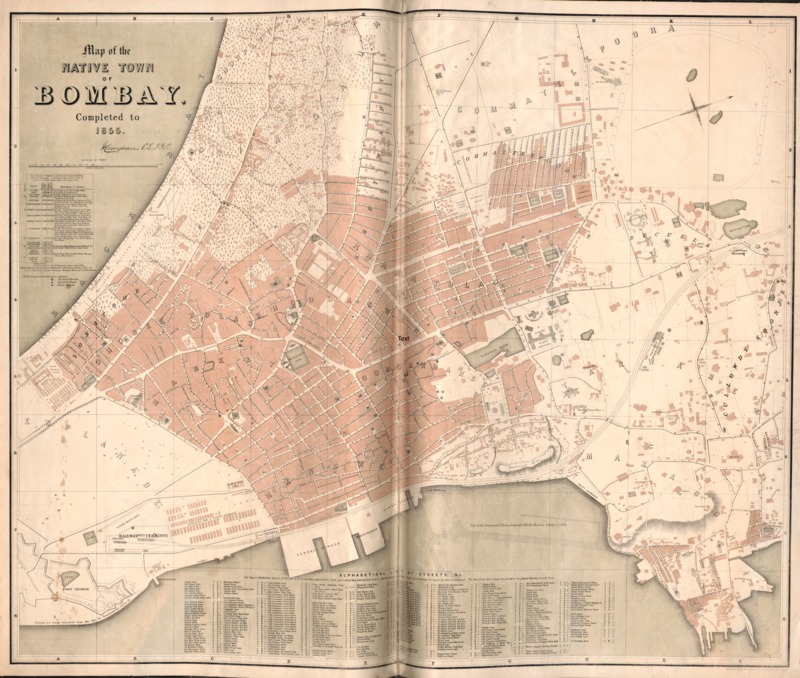
This is a map of Bombay in the year 1855.
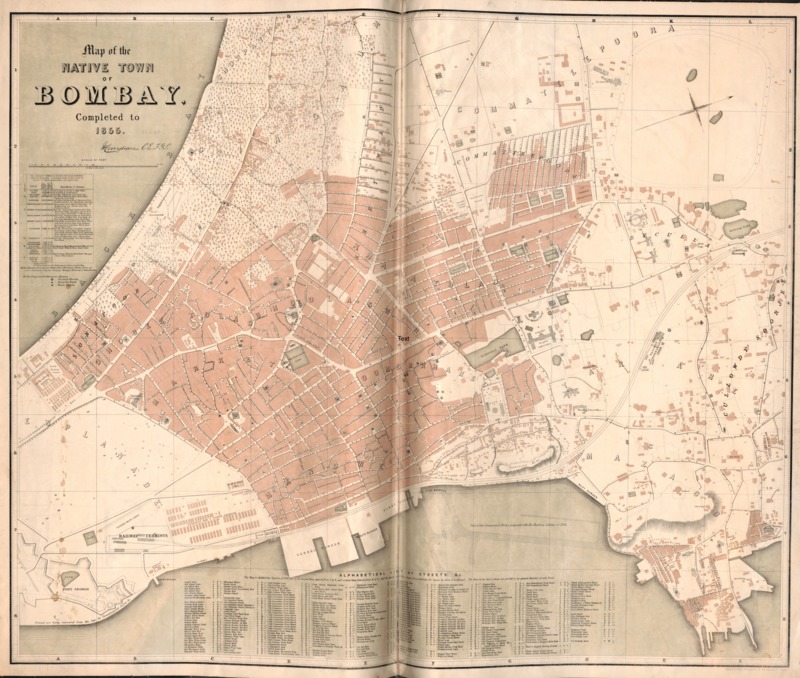
This is a map of Bombay in the year 1855.
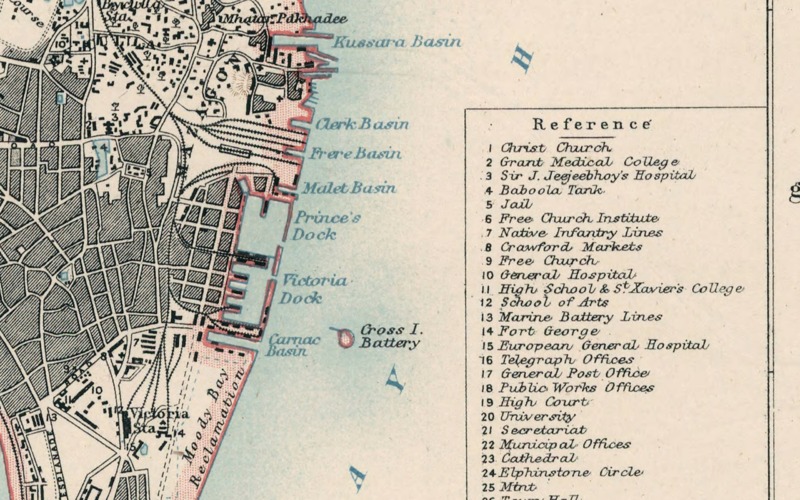
This is a map of the Calcutta, Madras, and Bombay areas of India in 1894
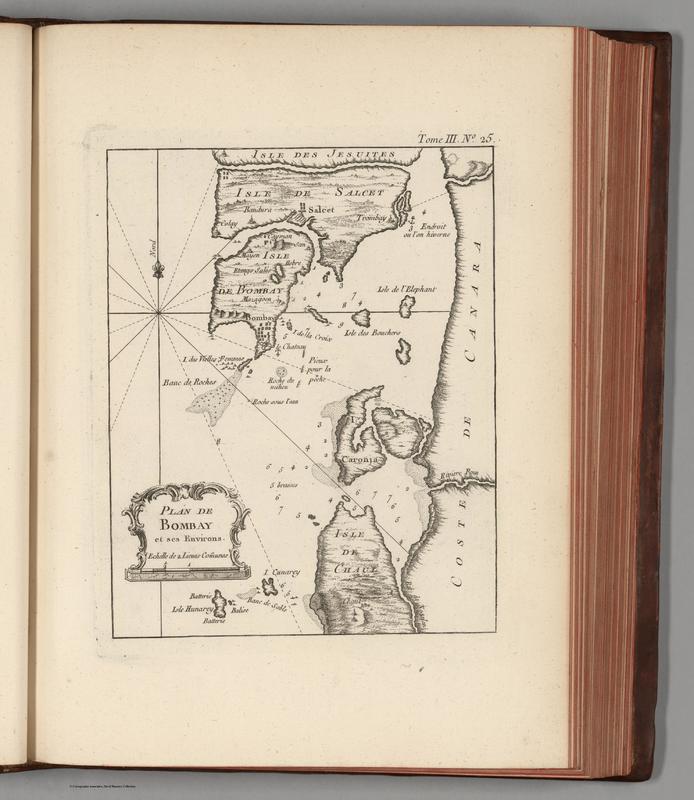
This is a map of Bombay in the year 1764
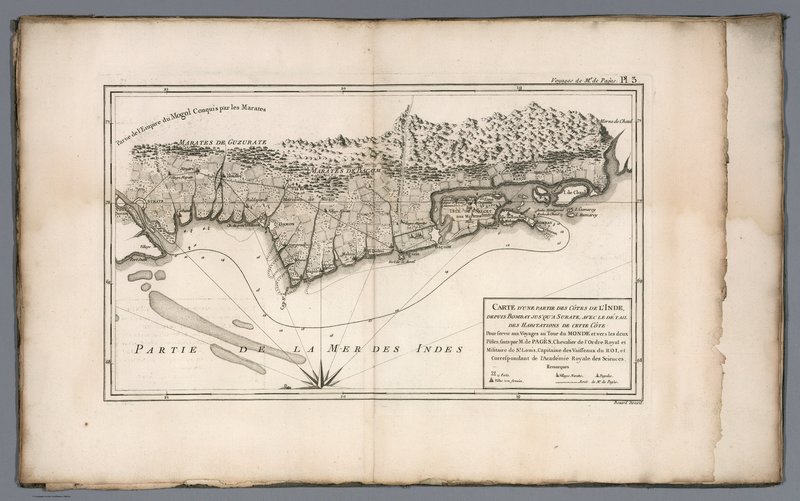
This is a map of the western coast of India in 1782
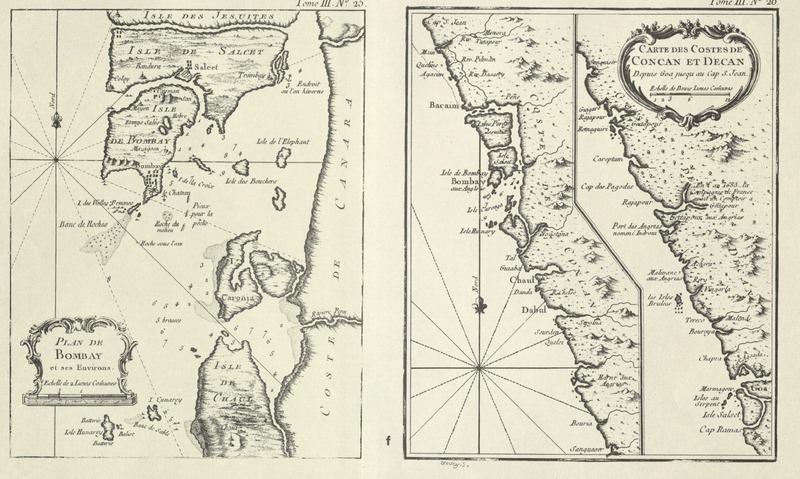
i. The chosen map is one made by the navigator Captain Jacques Nicolas Bellin (1703-1772) in 1764 and was published in 1980 in the atlas compiled by Susan Gole in New Delhi of “Early Printed Maps of India.” We will focus on the leftmost map titled…
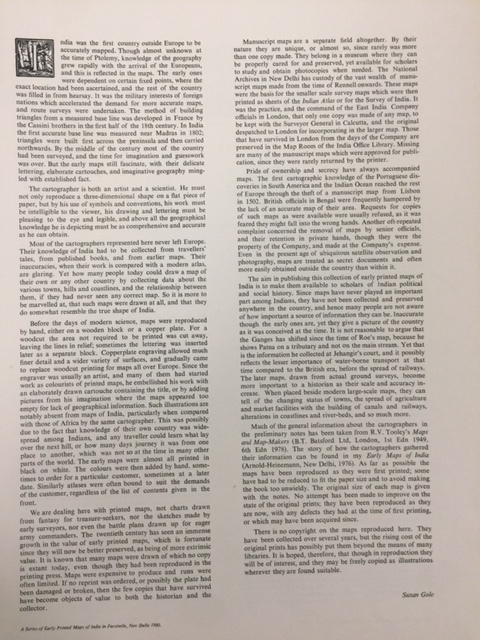
The Introduction in the atlas, A Series of Early Printed Maps of India in Facsimile, written by Susan Gole.
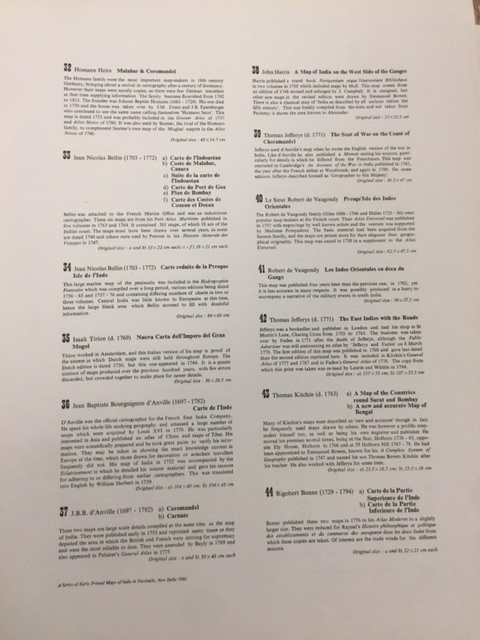
The descriptions of the maps in the atlas, A Series of Early Printed Maps of India in Facsimile, written by Susan Gole. The chosen map refers to map 33. A comparison map is map 43 described later made by Kitchin.
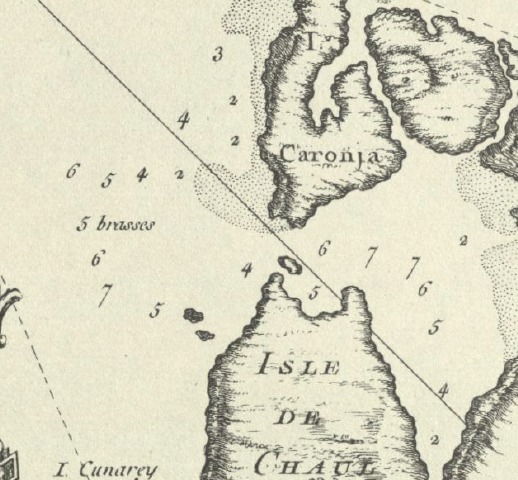
Numbers are scattered around the sea, which relay the information of depths most likely in leagues as mentioned in the legend.
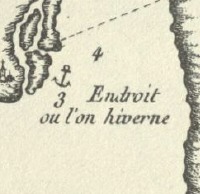
The message suggests a safe space to anchor a place to spend the winter: “Endroit ou l’on hiverne” (place where one winters).