Browse Items (2042 total)
Sort by:
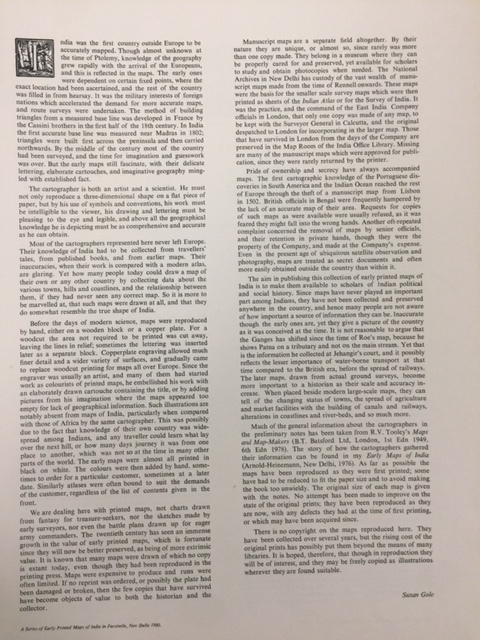
The Introduction in the atlas, A Series of Early Printed Maps of India in Facsimile, written by Susan Gole.
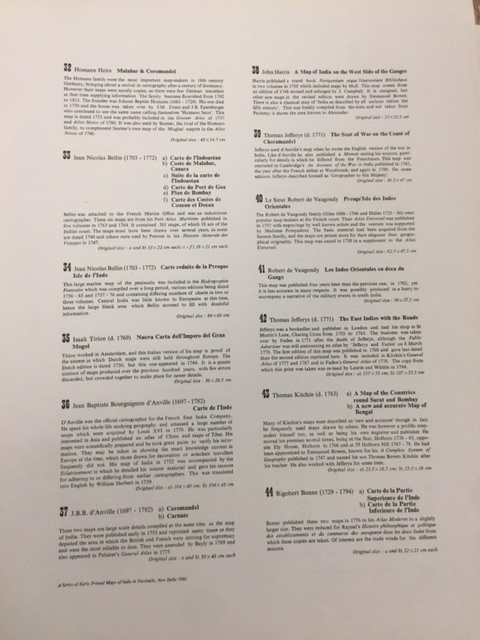
The descriptions of the maps in the atlas, A Series of Early Printed Maps of India in Facsimile, written by Susan Gole. The chosen map refers to map 33. A comparison map is map 43 described later made by Kitchin.
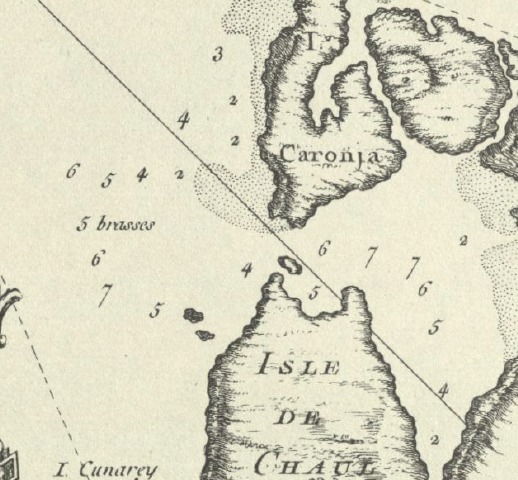
Numbers are scattered around the sea, which relay the information of depths most likely in leagues as mentioned in the legend.
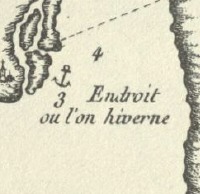
The message suggests a safe space to anchor a place to spend the winter: “Endroit ou l’on hiverne” (place where one winters).
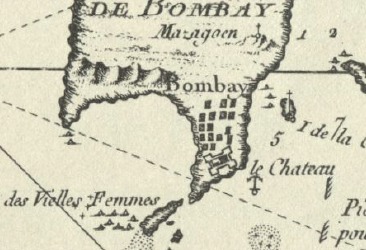
ii. The settlements are drawn in pictorially at the border of the Ile de Bombay. It may suggest that the Captain may have visited on land to the island and thought it was an important landmark for others traveling later to know of the settlements.
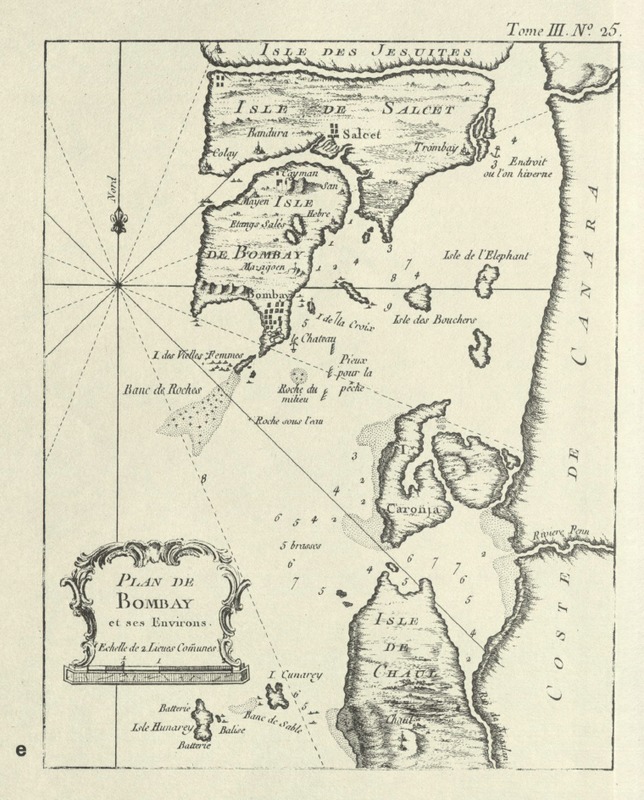
This map is a map of Bombay's seven original islands created by Captain Jacques Bellin in 1764.

This map is eerily similar to the Bellin’s map drawn in 1764. The only discernable differences are that the orientation of the words is changed.

Modern-day Mumbai is not only continuous, not all resembling the seven original islands, but is also attached to the mainland of India. This map was taken using Google Maps.

The Hornby Vellard project was completed in 1784 and connected all seven islands into one using causeways.