Birth of the Whirling Dervish Dance

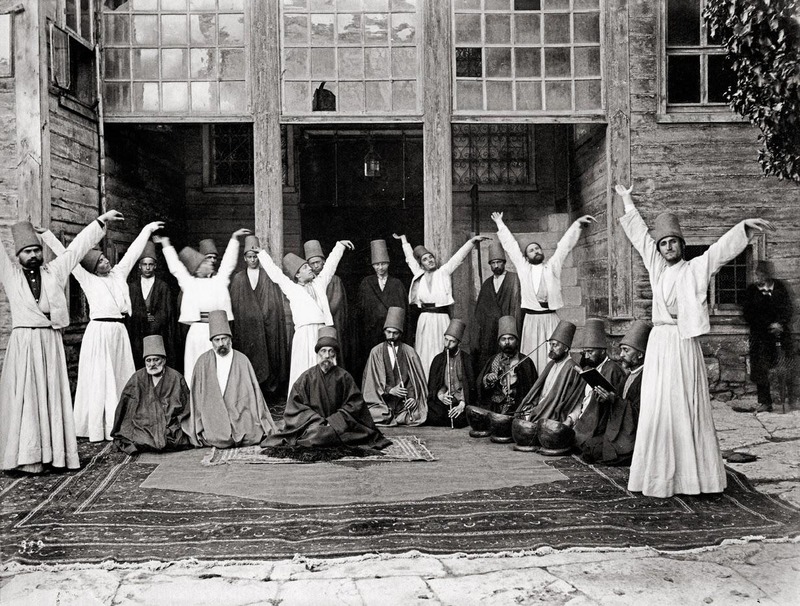
As long as we are considering the whirling dervish in the context of the Mevlevi museum as a lieu de mémoire, we should consider the dance as a lieu de mémoire itself. Indeed, the dance is itself offers a continuous physical activity commemorating a centuries old tradition. Starting in the 13th century, a mystic and poet named Mevlana Rumi popularized the idea of connecting with God through music and dancing, in particular the whirling dervish dance.
The dance is a collective activity, most parties acting in synchrony, with a couple elders leading it. This sort of tradition is taught, learned, and performed, so when compared with another tradition such as storytelling, it might be a more trusty means of passing on a ritual from one generation to the next. Indeed it is an intentional historical archive, such as a memorial, though it is constantly being refreshed through the education of the next generation.
In Nora's paper, he says the following relevant quote:
"Take, for example, the notion of a historical generation: it is material by its demographic content and supposedly functional--since memories are crystallized and transmitted from one generation to the next--but it is also symbolic, since it characterizes, by referring to events or experiences shared by a small minority, a larger group that may not have participated in them."
This exactly characterizes the whirling dervish pedagogy and tradition, because it is passed down and functional in that passing down of knowledge. Yet, it is symbolic, because it is only learned by a small segment of religious leaders.