Copp's Hill Burying Ground and the Puritan Ethos
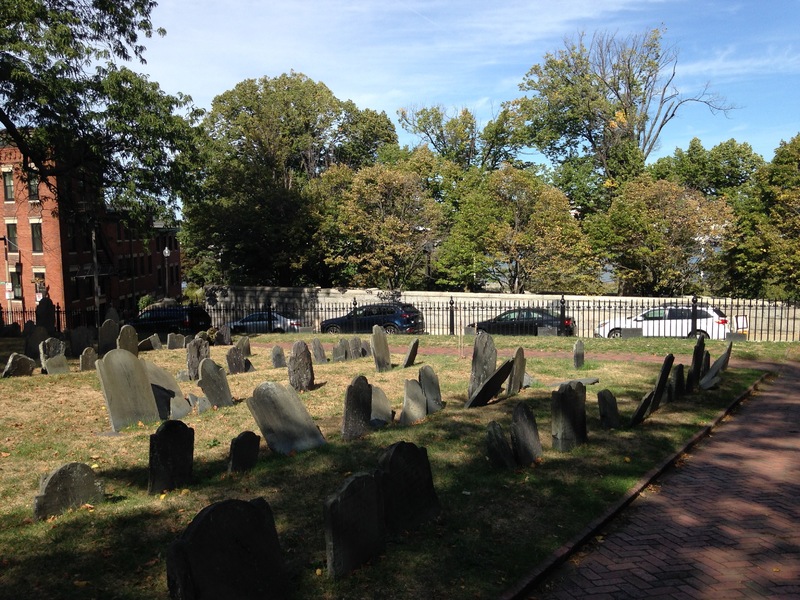
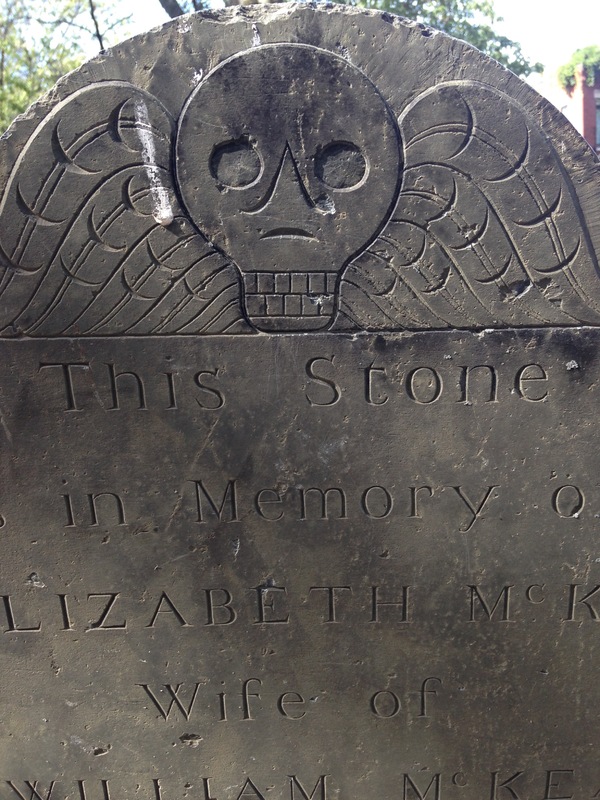
Copp’s Hill Burying Ground is a humble cemetery founded in the 1600s that still sits in all its modesty in Boston’s historic North End. It was the final resting place of many early influential colonial figures. It is thick with the spirit of Puritanism, a religious movement that sought to “purify” itself from the excess of the Church of England and refocus human action on unassuming expression and a deferential relationship to God. Many of the early colonial settlers of Massachusetts came to America to build a society centered on these Puritan ideals.[1] As such, Copp’s Hill’s ornamentation is simple. The headstones are thin, seeming almost as if they might erode with the aid of another century or two. Many stand at irregular angles, lending a haphazard layout uncommon to a cemetery. The largest monuments, of which there is only a handful, are scarcely taller than an average person, which projects a sincerely austere sense of monumentality, if there is one at all. 80% of the headstones are adorned with the symbol “winged death,” a sort of macabre reference to their owners’ states. It eschews ostentation and restrains from pleasure in its entire signification.
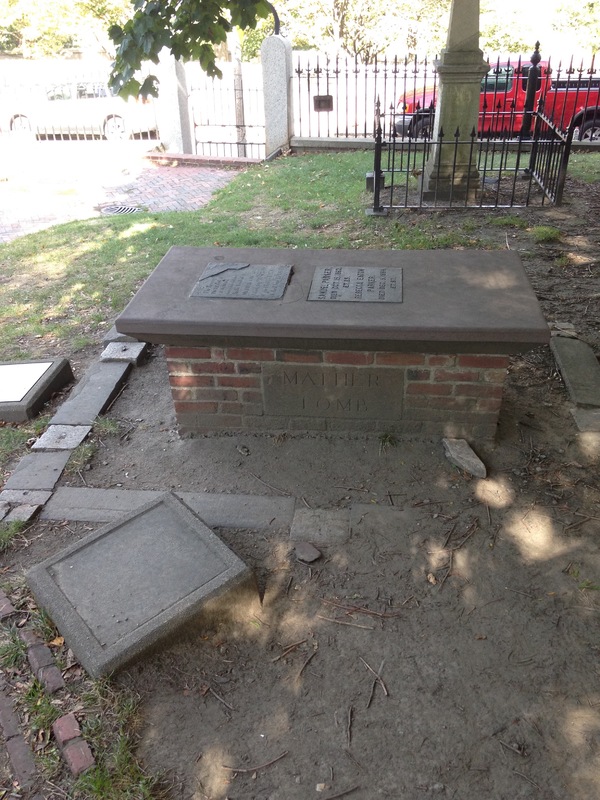
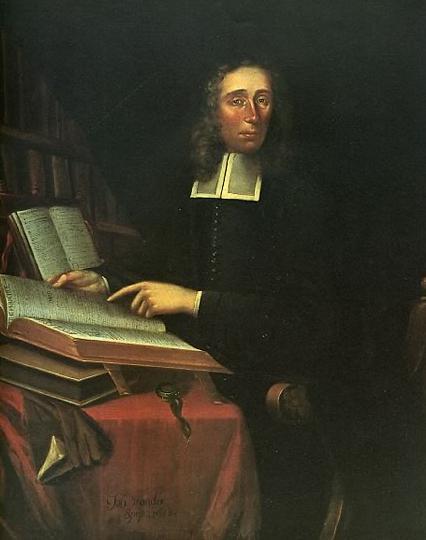
The same sense of Puritanism that is still projected by this space reigned heavily in colonial Boston. The cultural implications of Puritanism centered on pleasure restriction. Revelry was seen as a fault in character and submission to gluttony. For 22 years, the Plymouth Colony had a ban on Christmas celebrations, deeming them an impertinent sin.[2] Copp’s Hill’s most prominent “resident,” Increase Mather, an influential Puritan preacher, theologian, and one time president of the nascent Harvard College was an indefatigable proponent of Puritan moralism and powerful thought leader in colonial Boston. His presence at the cemetery reminds us further of the culture in 17th century Boston. Mather argued passionately in his Wo to Drunkards: Two Sermons Testifying Against the Sin of Drunkenness, that drunkenness was an offense serious enough to bar its perpetrators from “inherit[ing] the Kingdom of God.”[3] In Copp’s Hill, we’re offered a peephole into this old Boston, still standing in the contemporary city, allowing us to meditate on this ascetic moralism that guided urban life in its time.
[1] History.com Staff. “Puritanism.” History, A+E Networks. 2009. Accessed December 12, 2016.
[2] Barnett, James Harwood. The American Christmas : a Study in National Culture. New York, Macmillan, 1954.
[3] Mather, Increase et al. Wo to Drunkards : Two Sermons Testifying against the Sin of Drunkenness: Wherein the Wofulness of That Evil, and the Misery of All That Are Addicted to It, Is Discovered from the Word of God. Cambridge [Mass.], Printed by Marmaduke Johnson, and Sold by Edmund Ranger Bookbinder in Boston, 1673.