Reading The City as Palimpsest
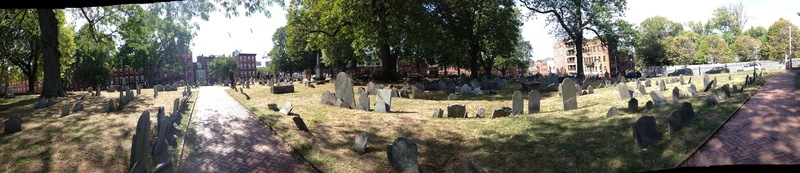
Over the course of this unit, we’ve covered two ideas that should be instrumental in our understanding of the urban. The first is an argument offered by the theorist Michel de Certeau in his The Practice of Everyday Life that an individual’s moving through and experiencing urban space has an interpretative and expressive element similar to reading and writing. This function makes the urban fabric as sort of “urban text” that’s read and written over and over again by “people moving through the city at ground level.” By coming into touch with urban objects, we build their meanings and share these meanings with other people. Accepting this notion is a crucial action to create a sort of hermeneutic understanding of urban life. This framework of reading and writing the city underscores the second instrumental idea: the conception of urban space as a palimpsest, a metaphor coming from manuscripts that have been written on several time, leaving a document that has been “reused or altered but still bearing visible traces of its earlier form.”[1] Just like a palimpsest, the city has been read and written in different incarnation over time and its current mode always carries residues of its past. Through reading the layers of the urban palimpsest, we can arrive at a fuller picture of urban space. In these pages, I plan to perform such an analysis of the Copp’s Hill Burying Ground in Boston, highlighting residues of the city’s Puritan, Colonial period that still exist in a highly modern urban space.