The Carousel
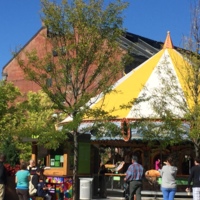
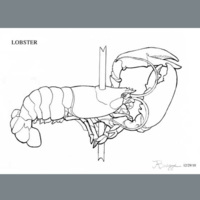

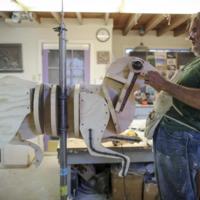
The greenway carousel has been described in multiple articles announcing its arrival as a place where children come to play and, on a slightly eerier note, where adults turn into children. Charlie McCabe, Director of Programming for the Greenway Conservancy told The Patriot Ledger that “It’s a universally happy place for little kids and big kids and anyone who just wants to come and watch,” while carousel manager said “The kid in us always come out when we see a nice carousel.” Sculptor Jeff Briggs, who designed the 36 carousel seats, each an animal indigenous the Boston area, told the Boston Globe that “[I’ve seen] as many smiles as you can imagine. And every adult turns into a 7-year-old.” The carousel plays soft rock tunes including James Taylor and Paul Simon, kids music including Julie Andrews and Raffi, and the themes of "classics" like Star Wars and Harry Potter. According to the Briggs Design website, is "considered New England's most accessible carousel for adults and youth with physical or auditory disabilities." The Greenway Carousel seems, from these descriptions, to represent one vision of a utopia: a place where innocence abounds in children and adults alike, where everyone is invited. It is, of course, the product of corporate 'donations,' its largest doner Tiffany & co giving 1.5M$ toward its construction, on the newly named 'The Tiffany and co. Foundation Grove'.
This miniature utopia/dystopia is one of the the most recent developments in a landscape built over 400 years. The carousel represents an attempt to bring new infrastructure to the park area, while integrating it into a narrative that can be constructed of the other features of the area. This duality, the active integration of the new with the old, is perhaps that which marks the post-modern built environment in Boston's Rose Fitzgerald Kennedy Park and the surrounding area.
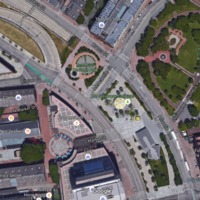
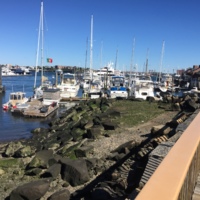
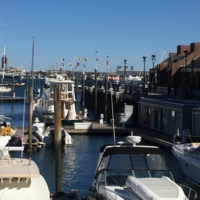
The carousel is situated on a strip of between Atlantic Avenue and John F. Fitzgerald Surface Road. Across Atlantic Avenue, the Christopher Columbus Park stretched toward the Long Wharf and one alcove of the Boston Harbor. Across the street in the other direction, across John F. Fitzgerald Surface Rd. is South Market Street, which stretched through a large, very enclosed shopping center to the Faneuil Hall Marketplace. Between these two venues, the carousel is a hub, a midway point between the oldest part of the landscape, the shoreline, stretching the horizon all the way across the water to East Boston, and the dystopic, insular world of the marketplace across the street. The carousel's design seems in keeping with its need to straddling these two worlds. It's circularity, its spinning motion which keeps anyone from entering or exiting while it moves creates an inherently insulated, self-sufficient world within the carousel; still, the animals represented in the seats of the carousel make a conscious effort to root the carousel in the indigenous landscape. The carousel, thus, both physically and symbolically represents a bridge between elements of the North End environment, natural and built. This consciousness of its environment is perhaps its greatest claim to modernity.
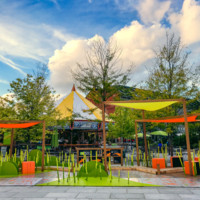
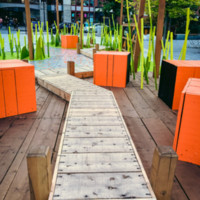
At present, a Japanese-inspired Mytoi Gardener has popped up around the outer edge of the carousel. Funded by 'The Trustees,' a land preservation and conservation non-profit, the garden was designed by local landscape architect Rob Barella. During my visit, I could see that the play environment created by the carousel impacts the way people interact with the garden, kids playing on the exhibit, walking its bamboo groves and Mytai Path. Mytoi gardens are intended to be places of seclusion and tranquility. This plastic, toy-sized, surrealist interpretation of the mytoi garden borders the carousel, further insulating its swirling motion from the surrounding urban landscape in order to comment, in my opinion, on its protected, corporate-dystopic nature, packaged and sold to children and parents alike.