Moscow
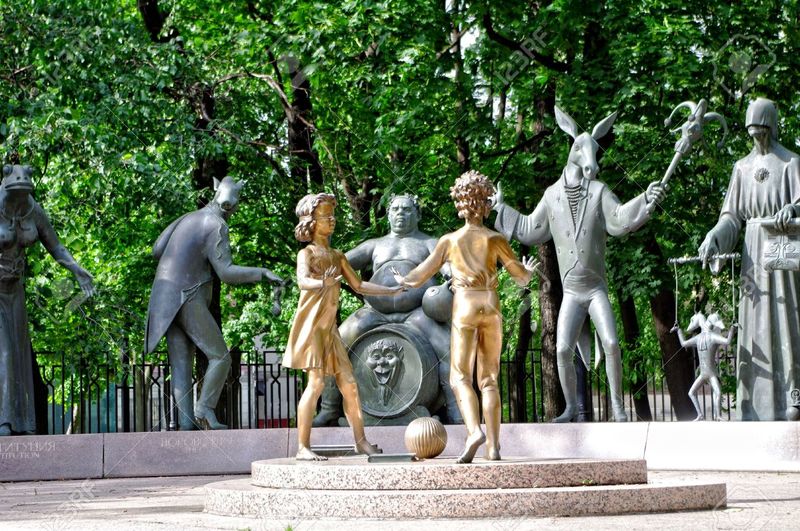
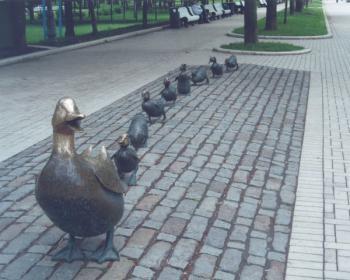
Moscow presents its underworld in a different way than both Boston and Mumbai. Though there is organized crime present in the Soviet Union, Stalin made sure that it was very repressed, therefore the underworld of Moscow is not so much a violent criminal one, but a politically criminal one. My Moscow exhibit focused on the post-Soviet Union monuments, and the monuments that were put up are representative of the culture that was deemed criminal during the Stalin era. As exhibited in the film I Am Twenty, a discharged soldier Sergei visits his two working class friends’, Slavka and Lucia’s, modest apartment in a modest neighborhood in Moscow. However, Sergei’s love interest Anya lives in a beautiful apartment with an elevator up in a beautiful neighborhood of Moscow. Though the disparity is not as apparent, the schism between the underclass and the rich is there. Slavka and Lucia have to walk up to their small apartment while Anya gets to dress well and take an elevator up to her large apartment. The response to the film by Soviet leaders was not a positive one. The film was condemned for promoting Western thinking and trying to get youth to think and do whatever they wanted without consulting elders. Western thinking was the real crime, and despite all of Stalin’s attempts, an urban underworld with a large youth population developed. Except this urban underworld dealt with Western ideology instead of drugs or violence. Though this underworld is much more metaphorical, it is still criminal and stemmed from communism creating rich-poor disparity. The slums of Moscow were essentially unlivable, while the wealthy lived beyond well. Therefore, the underworld supporting Western thinking developed in Moscow, and eventually when the Soviet Union fell, this underworld came to light with large pushes and even had Barbara Bush install a statue as well as having statues directly depicting sins, things that never would have happened in the Soviet Union.