~Conclusion, Special Thanks, Bibliography & Final Fun Story ~
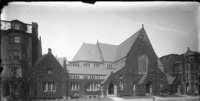
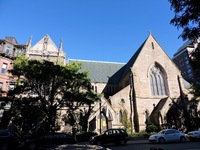
It is only fitting to conclude with these same two pictures that we started with; over 100 years apart, the two images of Emmanuel Church's stunning facade portray, more than anything I have written, how this landmark acts as a palimpsest. As Newbury St. grows and evolves, its first ever building, Emmanuel Church, remains as a, still lively, relic of the neighborhoods roots. While the building's impecable New England gothic architecture gets subtly and tastefully expanded, the church's community progresses with furver to continue its original mission of bringing people together 'from the margins' to, as De Certeau put it, write Boston's 'urban text'. Digging in to the history of both the building and the community that has personified its beauty over the years, allows for a deeper understanding of Back Bay, Boston, and all urban landscapes.
Special Thanks:
I was very lucky to find such a kind man to take me around this beautiful church. I was given such a breadth of knowledge, much of which I would have never been able to find online. Any amount of research shows the emmence history and importance of Emmanuel Church in the big picture but hearing the accounts from a long-time active member of the church gave me an in-depth look at the personal elements of the community. The picture to the left comes with my favorite story my guide shared with me during my visit:

~ Back in 1950 the church noticed that things started to go missing. One morning many of the church's most expensive works of art and statues were gone. It was an interesting mystery because whoever had done the crime had to have been an active member of the church because the door was not broken in but just unlocked. Small things continued to be stolen and the church had issued people to watch at night. Eventually they found out that the organist was hiding in the church after the nighttime shows and spending his night taking valuables. Since then, the church has replaced the art and now has a much more hightech security system.