Blindness Within
In reflecting upon this palimpsest model of the city, it is interesting to consider whether the inhabitants of Beacon Hill in each given moment – whether it was a century ago or the present – are themselves constantly aware of the incredibly layered and historically dense space they live in. In “The Practice of Everyday Life,” Michel de Certeau paints the picture of one looking down at the city of Manhattan from the 110th floor of the World Trade Center, as if one is removed from all the bustle of the city and consequently able to view and understand the city in its entirety. Once one returns back to the ground level, however, one is “below the thresholds at which visibility begins” (113) and no longer able to truly “see the whole” – the ‘urban text’ that is co-written by all the individuals walking around the city. De Certeau states:
“People moving through the city at ground level write the "urban text" without being
able to read it. The city is provisionally created as a patchwork quilt of individual
viewpoints and opinions. "The created order is everywhere punched and torn open
by ellipses, drifts, and leaks of meaning: it is a sieve-order."
Michel de Certeau, “The Practice of Everyday Life”
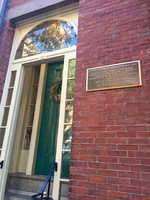
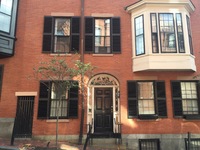
In applying de Certeau’s theory, perhaps each individual that inhabits the neighborhood of Beacon Hill, who undoubtedly contribute to the evolving story of Beacon Hill in their own ways, are unable to see the full extent of this very story that they are a part of. Beacon Hill as a palimpsest means that each and every layer of temporal and spatial history – which in it of itself are made up of the actions of the individuals that make up each dimension – are part of a large mixing pot that make Beacon Hill neither what it was back then or what it is now. But if the individuals that inhabit each and every point along the timeline – such as the abolitionist that lived in 3 Smith Ct during the mid-19th century, or the family that lives there today – are indeed writing this “urban text” with their individual viewpoints and opinions and rendered unable to read the larger story they are contributing to, perhaps it is only an outsider like myself that can truly perceive this city as a palimpsest. Perhaps the meanings created by each inhabitant are too transient and small of a moment in the large timeline of Beacon Hill’s history that it takes someone more distant from the core of the palimpsest to perceive its place within the giant mess. It is much like how this very moment we live in now may seem like nothing but an eternal present to us, but will eventually become a moment in history to another living in the far future, much like he who looks down at us from the 110th floor of the World Trade Center.