Eating Experience
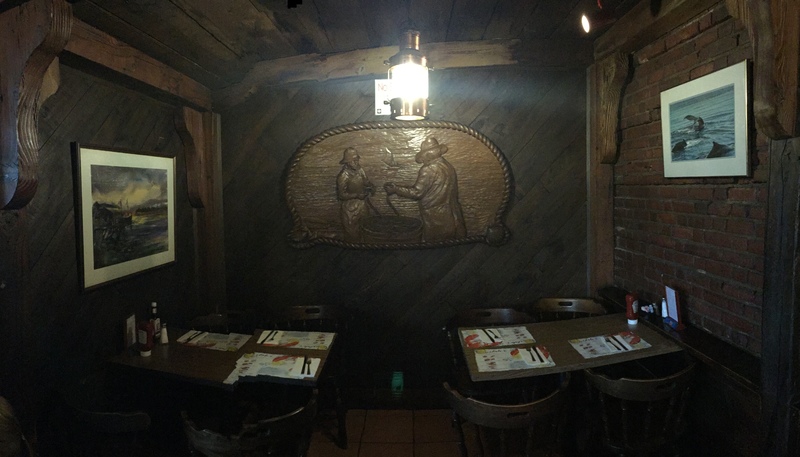

Getting to Fish Pier from the T is a bit of an adventure in its own. After getting off at South Station, I took the Silver Line just past the World Trade Center stop and proceeded to walk for about 8 minutes until I made my way to the Pier. The pier is adjacent to several others in addition to the Institute of Contemporary art and the Bank Pavilion, landmarks of the area’s recent development and catering to tourists and middle to upper class citizens. The pier is deceivingly larger than one would make it out to be on a map of the area, yet NoName stands as a hole in the wall seemingly out of sight to the unobservant eye. The help of a banner in the front of the pier allows all to properly distinguish it from other neighboring shops. Walking along the pier as the sea breeze hits you traps you for a moment, and it teleports you to the possibility of being out at sea on a calm afternoon. Witnessing the moderate amount of cars outside the establishment serves as validation of its constant local presence. Walking inside, one can detect a homeliness unfamiliar in many other parts of Boston. The mingling of people of all races, career sectors, ages, and backgrounds provides a subtle buzz that keeps the restaurant alive. Dimmed lighting provides a confined feel to the place in spite of it being able to sit well over 100 or 150 people. Talking with current management, I learned that the interior and cultural aura of the restaurant has not changed much from a few decades back. When the outside panel doors are opened, one can feel a slight breeze and the smell of the ocean front coming from a few feet away. This is likely the same experience that one could have achieved decades back. This is evident through the unchanging interior design of the restaurant being that of an antique fish house while the outside world makes its attempts to latch onto the latest trend in economic productivity or urban design. While considerable changes to the people that inhabit the area have occurred, NoName fights to preserve common experiences. This preservation is a microcosm of Boston as a city; a fundamental identity clashes with the demand for modernization of principles and ideas despite there being merit to both the antiquated and contemporary.