Inclusions and Exclusions in the Urban Landscape
While it may be obvious that mediums like literature, film, and maps are subjective means of expression especially because they have specific individual authorships, delving deeper into even the urban landscape itself may present to us unique ways of inclusion and exclusion leading to subjective expression. This is because all institutions and structures in the urban landscape change over time, usually due to the deliberate actions of an individual or group of individuals. Structures like Boston’s Fenway Park, Istanbul’s Great Palace and Moscow’s Muromtsev Dacha are all examples of changing institutions over time that illustrate the effects of individual choices of inclusion and exclusion to generate a somewhat subjective means of expressing the urban lifestyle.

Fenway Park is one such example of subjective change, especially when one investigates its immediate surroundings, which have commercialized immensely throughout history. What was once surrounded by educational institutions and churches as seen through the 1912 map to the left has become territories of commercial and touristic shops, restaurants and even a modern music and entertainment venue as seen through the photos below.


This transition toward commercialization is a fascinating result of individual choices over time choosing to include and accept these commercial institutions and exclude structures that existed prior. These decisions all present a subjective view of what individuals think would fit best into the surrounding area of Fenway and furthermore in the city itself. Therefore, this interplay between inclusion and exclusion, while broader than the tactics expressed in film and literature, generate a sense of urban subjectivity that is valuable to study in the scope of urbanism as a whole.
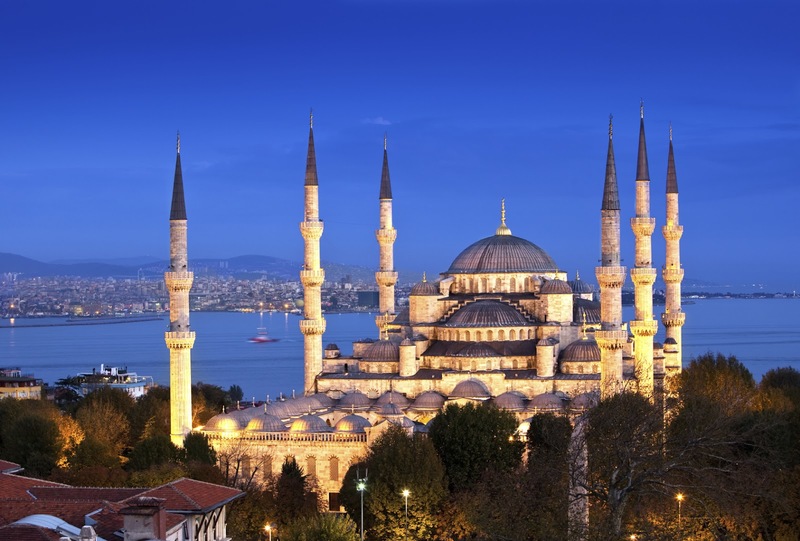
Similarly, the Great Palace in Istanbul, which had once been a luxurious and grand political center and the heart of Constantinople, over time has succumbed to being buried underground and replaced by the Sultanahmed Mosque, as seen in the image to the right. Today, the location of the Great Palace is an excavation site, the Sultanahmed Mosque, and also a museum, which collectively represent the changes throughout history that, like the changes in Fenway Park, are the results of individual choices of what to include and exclude in the city.
Similarly, the changes throughout history to the Muromtsev Dacha can also be viewed in a similar scope, as the dacha was once a beautiful escape from potentially overwhelming urban life in Moscow but is now burned down to the ground. The “accidental” fire was rumored to be the result of desires in the town to transform the dacha into a car park, and such intentional decisions are again representative of individual choices and desires of what to include and exclude in a city. These changes to the urban landscape, as results of individual and deliberate actions and choices over time, represent subjective opinions of what people think is best for the city and its residents. Therefore, studying the urban landscape and its changes throughout history presents to us individualized and biased views that are helpful to understanding urbanism as a cultural phenomenon.
Similarly, the Great Palace in Istanbul, which had once been a luxurious and grand political center and the heart of Constantinople, over time has succumbed to being buried underground and replaced by the Sultanahmed Mosque, as seen in the image to the right. Today, the location of the Great Palace is an excavation site, the Sultanahmed Mosque, and also a museum, which collectively represent the changes throughout history that, like the changes in Fenway Park, are the results of individual choices of what to include and exclude in the city.
Similarly, the changes throughout history to the Muromtsev Dacha can also be viewed in a similar scope, as the dacha was once a beautiful escape from potentially overwhelming urban life in Moscow but is now burned down to the ground. The “accidental” fire was rumored to be the result of desires in the town to transform the dacha into a car park, and such intentional decisions are again representative of individual choices and desires of what to include and exclude in a city. These changes to the urban landscape, as results of individual and deliberate actions and choices over time, represent subjective opinions of what people think is best for the city and its residents. Therefore, studying the urban landscape and its changes throughout history presents to us individualized and biased views that are helpful to understanding urbanism as a cultural phenomenon.
Lastly, in the context of the urban landscape, the tools that we have utilized throughout this course, especially laying out our assignments through the Omeka tool and TimelineJS in the Istanbul assignment, have been extremely helpful in helping us to visualize urban subjectivity. For example, by including media items like photos and videos, we are more capable of visualizing and understanding physical changes to the urban landscape over time. Finally, through TimelineJS, the changes to the Great Palace site in Istanbul can be visualized in a temporal setting, which is helpful and valuable because we are able to understand the timeframe of these subjective changes not only as a whole but also in relation to society and history at the specific time of change.
Lastly, in the context of the urban landscape, the tools that we have utilized throughout this course, especially laying out our assignments through the Omeka tool and TimelineJS in the Istanbul assignment, have been extremely helpful in helping us to visualize urban subjectivity. For example, by including media items like photos and videos, we are more capable of visualizing and understanding physical changes to the urban landscape over time. Finally, through TimelineJS, the changes to the Great Palace site in Istanbul can be visualized in a temporal setting, which is helpful and valuable because we are able to understand the timeframe of these subjective changes not only as a whole but also in relation to society and history at the specific time of change.
Works Cited
1. Ying, Stephanie. "Fenway Park: Boston's Historic Home of Entertainment." Omeka. Humanities 54, 2016. Web.
2. Ying, Stephanie. "The Russian Dacha: Highlighting the Deviation between the Famed and the Commonplace" Omeka. Humanities 54, 2016. Web.
3. Ying, Stephanie. "The Great Palace: Presence and Absence as a Lieux de Mémoire" Omeka. Humanities 54, 2016. Web.
Works Cited
1. Ying, Stephanie. "Fenway Park: Boston's Historic Home of Entertainment." Omeka. Humanities 54, 2016. Web.
2. Ying, Stephanie. "The Russian Dacha: Highlighting the Deviation between the Famed and the Commonplace" Omeka. Humanities 54, 2016. Web.
3. Ying, Stephanie. "The Great Palace: Presence and Absence as a Lieux de Mémoire" Omeka. Humanities 54, 2016. Web.