Mapping the City
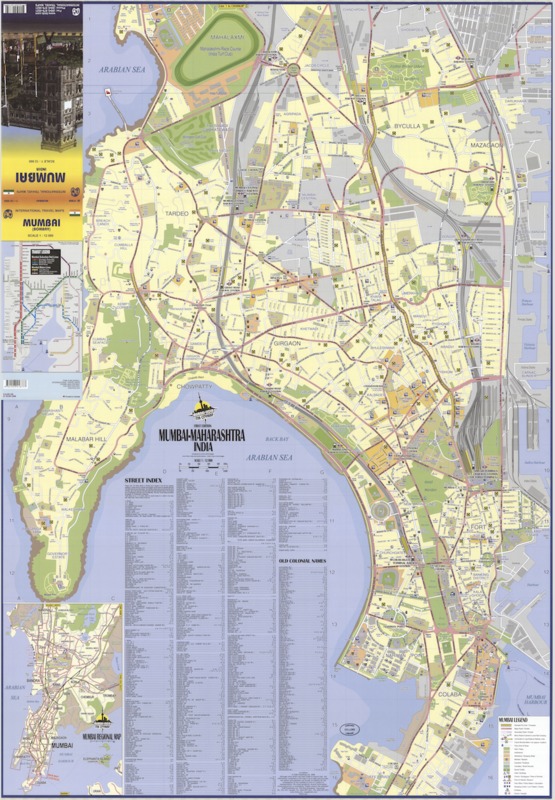
While literature and film are both subjective mediums in which creators can express opinions about a city, there are also many other mediums through which makers can underscore these subjective viewpoints in less direct ways. One such medium is the map and cartography, where a cartographer has to constantly make decisions about omissions and inclusions within the map to effectively deliver important and applicable information to the audience. Andrew Alfred-Duggan's map, “International Travel Maps and Books (ITMB) Mumbai City Map,” as shown to the left, provides the viewer with an item that if investigated closely, presents the city as one that features simultaneous booming globalization and tourism with poverty and class inequality.

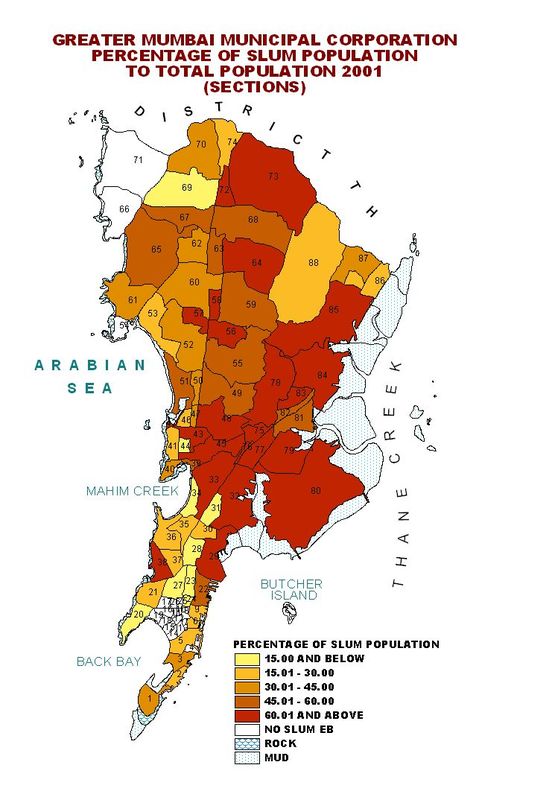
The most interesting way that Alfred-Duggan subjectively expresses this idea is through the boundaries in the map and what the cartographer chooses to include and exclude within these boundaries. The two images to the right help to express the idea of Mumbai as a simultaneously booming but also economically suffering metropolis. The upper photo tells us about the boundaries that the cartographer has set for his map, while the comparable lower photo is an overview of the city depicting areas of Mumbai that have larger and smaller slum populations. As seen through comparing the two photos, the regions included in the map by Alfred Duggan are mainly regions with relatively lower slum percentages as compared to the surrounding areas that are heavily dense with darker orange and red colors. This deliberate inclusion of more affluent areas and exclusion of slum regions in a map geared toward tourists and travelers highlights the cartographer’s idea of Mumbai as a city with regions that are striving and also areas that are heavily suffering. Through a map-maker’s ability to choose what is included and excluded in his or her map, especially in terms of its legend, boundaries and other visual aspects, he or she is able to subjectively express ideas about the city that are valuable to our understanding of urbanism as a complex phenomenon.
Works Cited
1. Alfred-Duggan, Andrew. Mumbai City Map. N.p.: International Travel Maps and (ITMB), 2008.
2. Ying, Stephanie. "Contemporary Mumbai as a Simultaneously Bustling and Suffering Metropolis." Omeka (2016): Humanities 54. Web.