Victory Park
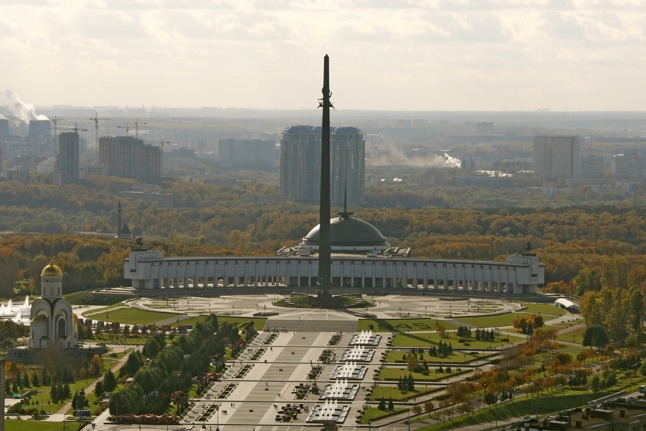
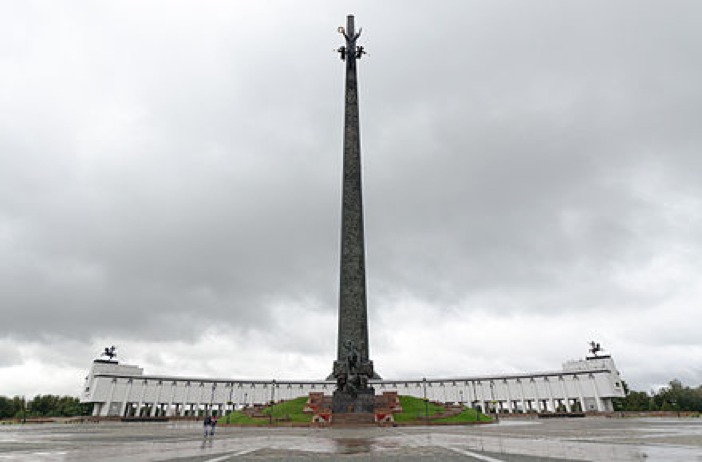
The presence of Victory Park at the peak of Poklonnaya Hill is poetic in itself. At one of the highest points in Moscow, lies Victory Park in all of its commemorative glory. The site was originally meant to commemorate the Soviet victory in the Great Fatherland War (1). The project was then picked up by Gorbachev in the 1980s, but was still left unfinished after the Soviet Union dissolved in 1991. After some redesigning was done, the park was opened up in 1995 on the fiftieth anniversary of the end of World War II. In a few ways, the location itself is contradictory, as it was previously the location at which Napoloen arrived in the early 1900s expecting to receive a Russian surrender. However, instead we now find one of the grandest war memorials on Earth atop the hill. While there doesn’t seem to be too much of a connection to a specific case of representation here at this site, it is still useful to again think about the purpose that Russians had in building this establishment here and what affect on their population they were trying to garner. The name of the hill that Victory Park is located on is derived from the Russian term “to bow down”, which lets us know yet again what kind of atmosphere the government creates around war.
- Lebow, Richard Ned., Wulf Kansteiner, and Claudio Fogu. The Politics of Memory in Postwar Europe. Durham: Duke UP, 2006. Print. p. 277