History and Memory of Taksim Square
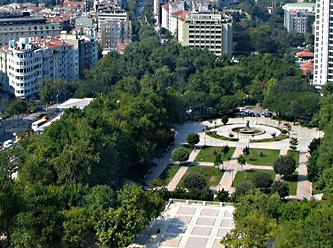
Taksim Square carries less of a physical presence than a non-visceral presence that has maintained relevance over recent centuries. The physical presence of Taksim Square is not at all imposing of the space that defines its geographic location. From reservoirs and graveyards to stadiums and social gathering spaces, Taksim Square has undergone shifts in its utility purpose. While the utility of the square has indeed maintained relevance to the waves of citizens that call Istanbul home, its identity has been defined by less tangible uses. Instead, the historical incidents that have occurred during its presence have come to define the cultural gravity that is attached to the space. The square has served as a battleground for protestors and citizens of many backgrounds and causes ranging from the pushback on substantial renovations to the square’s and Gezi Park’s usage to the celebration of certain holidays.
Indeed, Taksim Square and Gezi Park are centers of ideas and ideologies competing for their mainstay in the relevant mix of Istanbul culture. Whether the ideas are expressed by the government or by the people, the square and park are symbolic of the trending values that the city holds true. One could say that the very soul of Istanbul culture resides within the confines of the social setting. It is through the oscillation of cultural power between the citizens of the city and external forces, be it military to religions, that Taksim Square holds merit in being a Les Liuex de Mémoire. Pierre Nora, an observer of such phenomena, claims,
“Memory is life, borne by living societies founded in its name. History, on the other hand, is the reconstruction, always problematic and incomplete of what is no longer. History … calls for analysis and criticism. Memory installs remembrance within the sacred; history, always prosaic, releases it again.”
The oscillating forces of values that Taksim Square represents mirrors the critical conflict between citizens of Istanbul and their ideological battle with social or government institutions in marinating the value of the square. To the citizens, the essence of Taksim is representative of Nora’s memory, the ground stands as a symbol for the subjective sensorial experiences evoked by the square throughout the ages of its existence. Institutions like the government prioritize the space as a moment of historical value; this manifests in their recent attempts to deconstruct the spaces social utility to reconstruct barracks, a physical use that dates back nearly a century. Taksim Square is a soul that represents Istanbul’s culture and values that is fought over through the folds of time.