Urban Redemption
In its modern incarnation, Post Office Square could be mistaken for a singular project of urban renewal, revitalizing its neighborhood through the creation of a public green space. A deeper look at the site’s history, however, reveals that this act of renewal is only one of many. In fact, Post Office Square has witnessed numerous cycles of growth, decay, and rebirth, from the seventeenth century to the present. Viewed as a palimpsest, the square can be seen as a site of continuous yet heterogeneous reinvention. Its various changes reveal the changing conception of urban “success” and “failure,” as Boston’s economic and cultural growth prompted changing needs within the city’s tightly packed center. The legacies of these changes—both tangible and intangible—still shape the square’s current form.
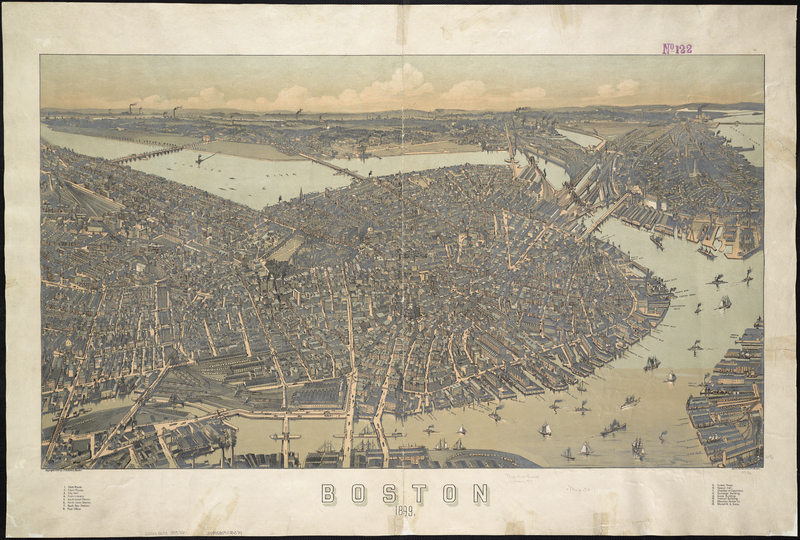
According to the Norman B. Leventhal Park website, the Post Office Square site had developed by the early 19th century into an upscale residential neighborhood known as the “Old South End,” home to many elite Boston families. With Boston’s emergence as a global hub for maritime and rail trade, as well as an influx of immigrants later in the century, the neighborhood’s illustrious mansions were eventually replaced by warehouses and tenement housing. This shift from a residential to a commercial focus is still visible today in the Financial District’s status as an economic center.


At the time, however, problems arose from the area’s packed and overcrowded commercial structures. The Great Fire of 1872 provided the opportunity to start anew: it destroyed many of these structures and allowed city planners to redevelop the area, creating the square’s current triangular space. With widened streets and the added prestige of the grand new U.S. Postal Office and Sub-Treasury Building, the square emerged from the fire reborn. By 1929, however, changing architectural preferences resulted in the Post Office’s demolition, robbing the square of its namesake and associated identity.
The 1950’s prompted another layer of attempted renewal in the square’s identity as palimpsest—this one with unanticipated consequences. Faced with an economic slump and growing traffic problems in the downtown core, city officials leased the square to a private developer who constructed a parking garage on the site. Widely viewed as an eyesore, the structure quickly fell into disrepair: images taken in 1984 reveal that it had become dilapidated, with broken windows and decrepit facilities.
Help arrived from private sources. Prominent Boston developer Norman B. Leventhal, who had recently renovated the neighboring Federal Reserve building into an upscale hotel, recognized the garage’s toxic effect on the neighborhood and set out to remove it. By forming a civic fundraising group, “Friends of Post Office Square, Inc,” he was able to purchase and demolish the garage and build the current underground facility and aboveground park, originally named Post Office Square Park but later renamed Norman B. Leventhal Park in his honor.

Taken as a palimpsest, these various cycles of decay and renewal inform the square’s current form. Its commercial identity, the post-fire borders created by its streets, and its functionality as a center for urban traffic all represent fragments of its past lives. Its newest identity as a public park is only the latest chapter in this narrative of redemption.