Accessible vs. Inaccessible
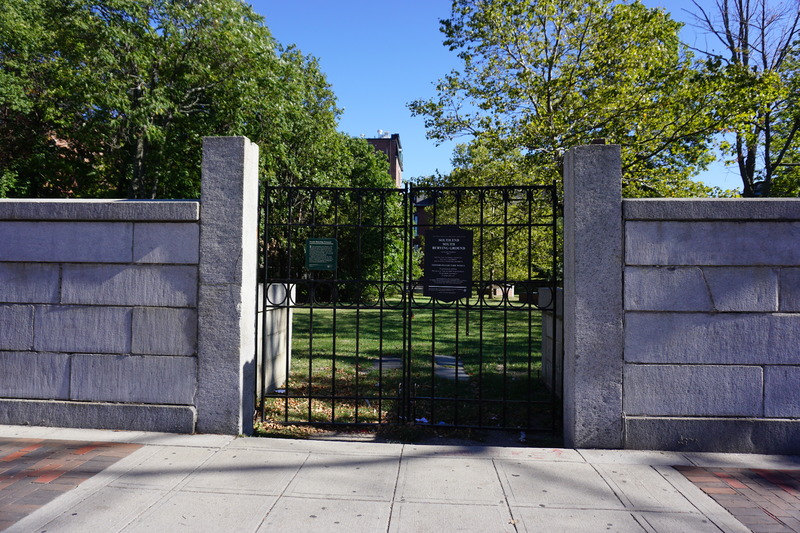
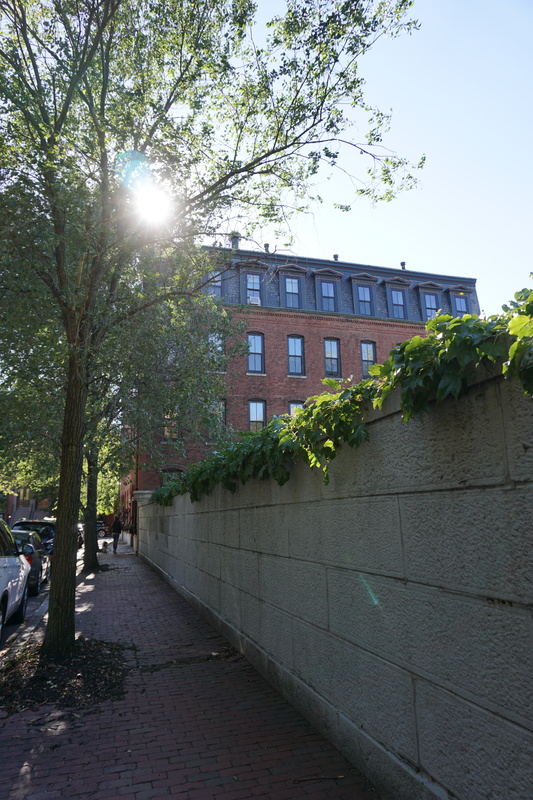
The site contains a paradox of being simultaneously accessible and inaccessible, echoing the paradoxical nature of certain spaces such as the Boston City Hall plaza that has the dual nature of being both public and private, straddling the line of being both extremely open yet also extremely inaccessible, both physically and metaphorically. While the surroundings of the South End Burying Ground are characterized by the hustle of human activity, the actual grounds of this graveyard were extremely tranquil due to the difficulty of accessing the grounds, for they are bordered on all four sides by imposing walls, with the only points of entrance guarded by two locked gates. Yet, it is important to note that this site still reflects the notion of a membrane rather than a concrete boundary because people can still view parts of the graveyard through the gates. Furthermore, with the advent of technology, people can also access and experience the site through Google Maps, which provides a comprehensive aerial view of the site and its composition.
Its extreme proximity to commercial and residential real estate, such as homes, a church, a hotel, stores, and restaurants, renders it accessible in terms of closeness to locations of places where people normally inhabit or visit. Bordered by four streets lined with trees and filled with parked cars and buildings, the site still remains elusive due to the inconspicuous nature of the site. Yet, the towering buildings overlook the site, making it extremely accessible to residents in these buildings and rendering the site very public. However, the imposing gates detract from its public nature and lend an air of mystery because visitors on the streets cannot obtain an unobstructed view of the site.
Thus, the site is a paradox because on one hand, it is extremely accessible because it is situated amidst dwellings and is free to visitors yet on the other hand, it is also highly inaccessible because it is so difficult to find and is sheltered or hidden from its surroundings due to the four walls that surround it. The walls are quite robust, without openings or other crevices that allow people to peek through to get a glimpse of the site. Unlike some other cemeteries, it is also not open to the public unless one specifically requests a visit 24 hours beforehand, contributing to the emptiness and secrecy of the burial ground.
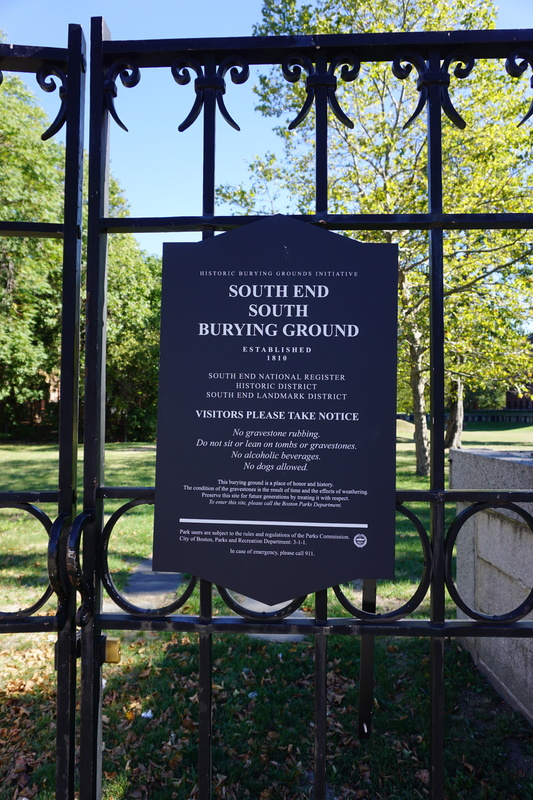
While this site was relatively insulated from the rest of its surroundings due to the walls that bordered it on all four sides, there was some interaction with other elements through the gates that rendered the boundaries somewhat porous and fluid because through the gates, visitors could traverse the grounds and examine the tombstones that occupy this space. Furthermore, the South End Burying Ground can be viewed aerially and its information, including its history and rules, is divulged to visitors by the two signs at the black gate that mark the entrance.