The Future
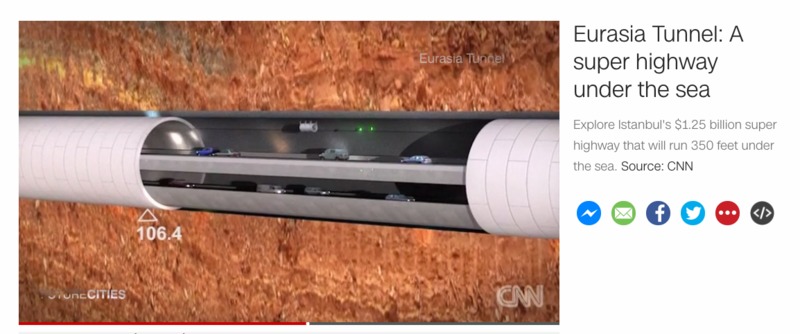
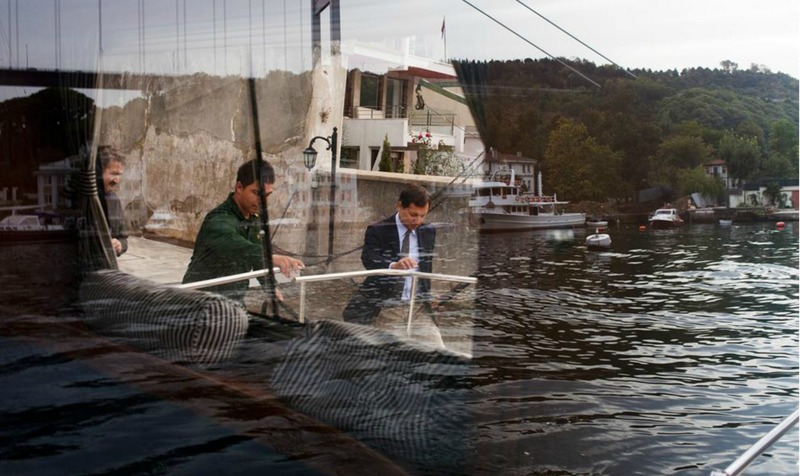
On December 20, 2016, the two-story Eurasia Tunnel is set to open in Istanbul under the sea to create a super highway that will link Europe and Asia together. Similar to the Marmaray Project, the Eurasia Tunnel is another way to link east and west together. The project cost $1.25 billion dollars and is 350 feet underneath the sea, as well as contain as many as 100,000 cars at a time. This engineering marvel is set to propel Istanbul into a further era of modernization and innovation that it has been longing for since the collapse of the Ottoman Empire. Through the use of the tunnel, trips will be made much shorter as there will be a direct way to connect to the two sides of Istanbul.
Just like the Marmaray project, the Eurasia Tunnel is set in proximity to the Theodosian Harbor. Though the Theodosian Harbor is no longer relevant aside from its history, its geographic location will forever be crucial to the development of Istanbul, whether it's in the Byzantine era or in the 21st century. Therefore, the Theodosian Harbor will always be a lieux de memoire, of Istanbul's innovation and need to expand and build, whether it be applied to the first millennium AD or the modern day.
Nora, Pierre. "Between Memory and History: Les Lieux De Memoire." Representations 26.1 (1989): 7-24. Web.
Merzeki, Yapi. "Eurasia Tunnel Project." EURASIA TUNNEL PROJECT (n.d.): n. pag. SK EC Joint Venture. Web.
"Eurasia Tunnel: A Super Highway under the Sea - CNN Video." CNN. Cable News Network, n.d. Web. 06 Nov. 2016.