Mumbai, A City of Its Own
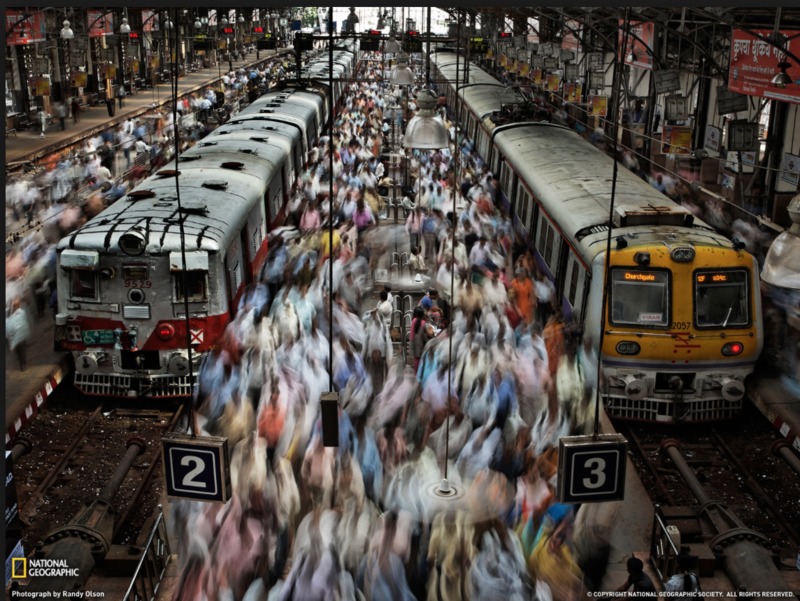
Standing as the Gateway to India and a beacon of economic prosperity in the Maharashtra region, Mumbai is one of the most prominent cultural hubs of India. Mumbai is home to the production centers of Bollywood, a bustling financial district and iconic cites such as the Taj Mahal, thus it is quite easy to label the site as an exotic place to travel. In fact, the India Tourism Development Corporation and a few other governmental agencies were founded in 1966 to increase appeal to foreign customers. The city is often marketed as an “exotic get away,” a friendly place where foreigners can taste what life in South Asia is like. However, the marketed images of Mumbai are notorious for commodifying the immense complexity of everyday life in the city. A prime example of the Western-friendly advertisement of the city is a 1970’s map called “Welcome to Bombay,” serving as a lens to examine the misleading representations of Mumbai and contrasting it to local reality. The first is what Mumbai traffic is known for: overcrowded and poorly organized railroad systems. During peak travel times, stations are swarmed with moving individuals and sights of train riders holding onto the vehicle from the exterior is common. Rather than providing full functioning and easy transportation modes as the Bombay map does, the trains pose an operational hindrance of moving around the city that mostly locals master.
To the top left of the Bombay map is a small orange blank space and the name “Dharavi.” The map fails to mention that the area is home to Asia’s largest slum, a sprawling conglomeration of decedent houses that dwells across the very core of Mumbai and is easily visible from any hi-rise in the area. Home to over 1 million inhabitants, an average of 18,000 people live in a single acre of land and the region is home to its own community of Mumbai citizens. Many proposed plans of reforming the unfortunately located slums and allocating dwellers to improved conditions elsewhere is met with a resounding “it is our home.” While tourist agencies may wish to ignore the problematic structures and poor inhabitants, one cannot avoid being exposed to the slums during the visit: it is a salient theme and issue of the city.

The misrepresentation of Mumbai by the touristic map is counterbalanced by a film that portrays a love story via uniquely Mumbai occurrences. In Ritesh Batra’s romantic urban film “Lunchbox,” two unlikely individuals form a strong distance relationship through the intricate system of dabbawalas lunch box deliveries. The film focuses on the daily lives of both Saajan and Ila as connected by a system unique to the city, centering the story about the local experience of being a Mumbai dweller. The film is unabashedly honest with the true living standards of Mumbai and the issues the city brings up. The dabbawalas traverse an immensely congested train to reach offices, corporate equipment is outdated, home appliance automation is minimal and even the issues of sexual assault on overcrowded buses is addressed. Yet, the resounding conclusion is that despite the hastiness of Mumbai life, two soul mates are able to find each other and thrive—the city indeed is manageable and livable for the local. Rather than brushing Mumbai’s lackluster aspects under the hypothetical rug for the sake of touristic capital gain, the film takes it in stride and shows how the social order of the city doesn’t have to cater to Western norms to work. It is a Mumbai order, and in the city’s own eyes, it is successful.