Inception: Christian Place of Worship
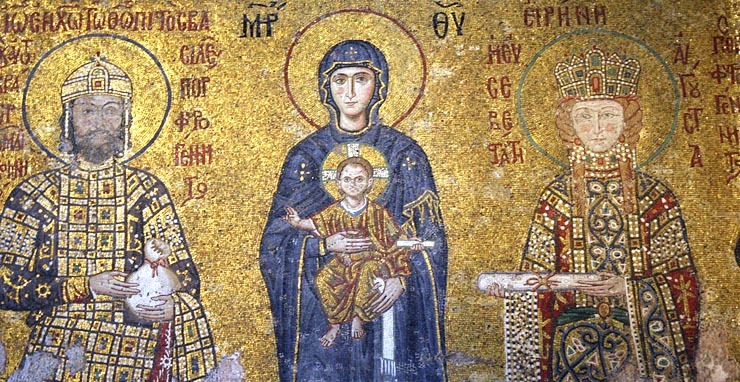

It was first erected by John II Komnenos and Eiren in the period 1118 to 1124 as “three large interconnected churches,” with each church dedicated to a specific divine entity (1). The South Building, which was first constructed as a monastic church, was dedicated to Christ Pantokrator. It also consists of the North Building, which was dedicated to the Virgin Eleousa and open to the laity, and the Middle Building, which was the imperial mausoleum church—otherwise known as the heroon—that was dedicated to St. Michael (1). Throughout the Byzantine period, the church complex had served various functions, such as being the residence of Latin rulers in the 13th century and the place for imperial burials during the last decades of the Byzantine Empire. Thus, the complex, even before the changing of regimes, had been utilized in various ways, reflecting the flexibility of the structure in accommodating the changing needs of the society. In relation to the conception of this structure as a lieu de mémoire, there is an association between the inception of the structure at a time when the monarch who established the structure was dedicated to restoring the power and influence of the Byzantine Empire and the glory and success of his campaign, for the establishment of the Zeyrek Camii symbolizes and memorializes the glory of John II Komnenos and his victories over the Turks and other hostile groups. Furthermore, the Zeyrek Camii is not just the repository of one kind of memory but also represents the charity and religiosity that characterized the monarchy.
(1) Ousterhout, Robert et al. “Study and Restoration of the Zeyrek Camii in Istanbul: First Report, 1997-98.” Dumbarton Oaks Papers, vol. 54, 2000, pp. 265–270.