Modern Restoration and Renewal
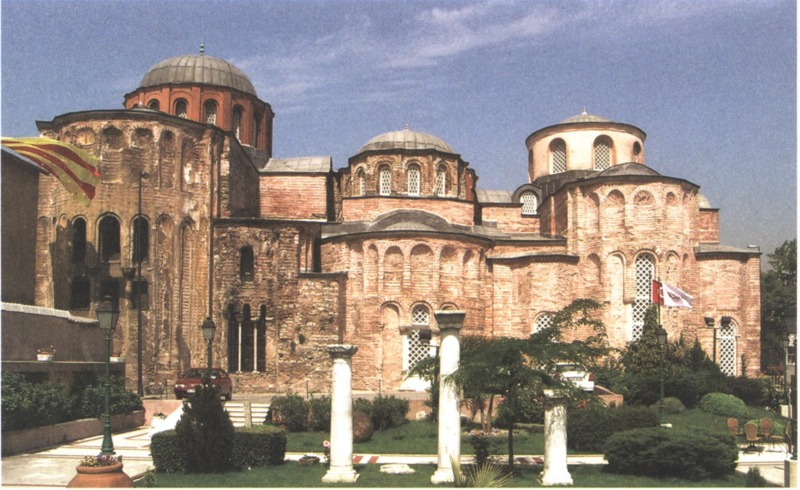

After a fire destroyed part of the complex in the 18th century, it has undergone both periods of neglect and several rounds of excavation and restoration. While it has been functioning as a mosque for hundreds of years, the actual physical place of worship has fluctuated, as only the Middle Building was used as a mosque in 1960 and since then the mosque has shifted to South Building (1). The modern period is characterized by two rounds of extensive, albeit still unfinished, restorations, having emerged from an extensive period of neglect and having been added to the UNESCO watchlist of endangered monuments in 2000 (2).
While it has always fulfilled its function as a place of worship, the state of the complex, up until recently, was dismal, having been subject to the “ravages of weather and vandalism” and embodying the age value of monuments (1). As a lieu de mémoir, it is interesting to note that preservationists are focused on all the history of the monument and not just its identity as its inception, stating that “a valid restoration must treat the building in the sum of its history, and this means respecting the modifications effected during the Ottoman period” (1). This idea of respecting both the original intention of the structure along with the historical changes that have shaped its identity throughout the years ties to Nora's notion that a lieu de mémoir entails the investing of a site with a symbolic era because what restorationists are trying to capture with their efforts is an elusive memory that is subject to individual interpretation, for it is a synthesis, not accumulation, of historical moments that cannot be easily characterized as a distinct, defining moment in history.
(1) Ousterhout, Robert et al. “Study and Restoration of the Zeyrek Camii in Istanbul: First Report, 1997-98.” Dumbarton Oaks Papers, vol. 54, 2000, pp. 265–270.
(2) OUSTERHOUT, ROBERT et al. “Study and Restoration of the Zeyrek Camii in Istanbul: Second Report, 2001-2005.” Dumbarton Oaks Papers, vol. 63, 2009, pp. 235–256.