Reappropriation of the Complex in an Islamic Context

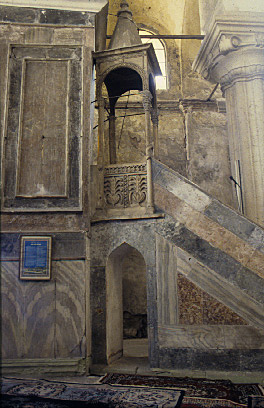
After the fall of Constantinople, the structure was converted into a mosque, and this reappropriation highlights the flexibility of the physical structure (1). Moreover, the monastery was converted into a medrese for some time under the reign of Mehmet II, otherwise known as Mehmet the Conqueror and after medrese closed with the completion of the nearby Fatih Camii, the entire complex was converted into a mosque known as Zeyrek Camii, with the name derived from a scholar who was teaching in the mosque (1). A medrese is essentially an Islamic educational institution that is religious or secular in nature. By transforming the complex, which was originally intended to be a Christian place of worship and a space for secularism via the hospital that was attached to the monastery, the new people of Constantinople had fundamentally altered the identity of the complex by making it serve a wholly new purpose that has little connection with its original purpose.
Moreover, this structure had been in flux even after the conversion into a mosque because after the completion of nearby medreses in the Fatih complex in 1471, parts of the complex that functioned as a medrese shut down and were abandoned by the students, highlighting the malleability of identity and the important role that memory plays in preserving this ever-evolving nature of the complex.
(1) Ousterhout, Robert et al. “Study and Restoration of the Zeyrek Camii in Istanbul: First Report, 1997-98.” Dumbarton Oaks Papers, vol. 54, 2000, pp. 265–270.