English Order
An aside from Bellin's map and French residency in Bombay during the 19th century, it is important to note that it was the British who were the ones in control and ruling Bombay and India. The French were simply another group of Europeans exploiting the region and hoping for the British to lose control so that they themselves could take over.
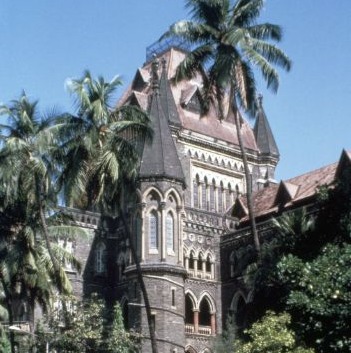
Though it promised to be a way for Indians to have a form of legal autonomy that was not fully controlled by Britain, the entire process to establish it was controlled by Queen Victoria. The Bombay High Court was approved by Queen Victoria in 1862 and was inaugurated later that year. The full structure that is present in modern day Mumbai was completed in 1878. Unsurprisingly, it was designed by a British engineer, James A Fuller. Despite the idea that Bombay was getting something of its own to control, it was important for the British to impose their power and influence by having the structure be made completely under their style and by them. The style is considered to be a Gothic early English style, with statues of justice and mercy in Western style depictions, not with Hindi goddesses of justice and mercy (Munshi)(Mehrotra).
Once again, it was another imposition of Anglo-British culture on Bombay. The structure still exists in 2016 and its un-Indian style is a stark reminder of the colonialism and British identity that Bombay was forced to endure.
Mehrotra, Rahul, Sharada Dwivedi, Y. V. Chandrachud, and Noshir Gobhai. The Bombay High Court: The Story of the Building, 1878-2003. Mumbai: Eminence Designs, 2004. Print.
Munshi, Kanaiyalal Maneklal. Bombay High Court; Half a Century of Reminiscences. Bombay: Bharatiya Vidya Bhavan, 1963. Print.