Who Drew Bombay?
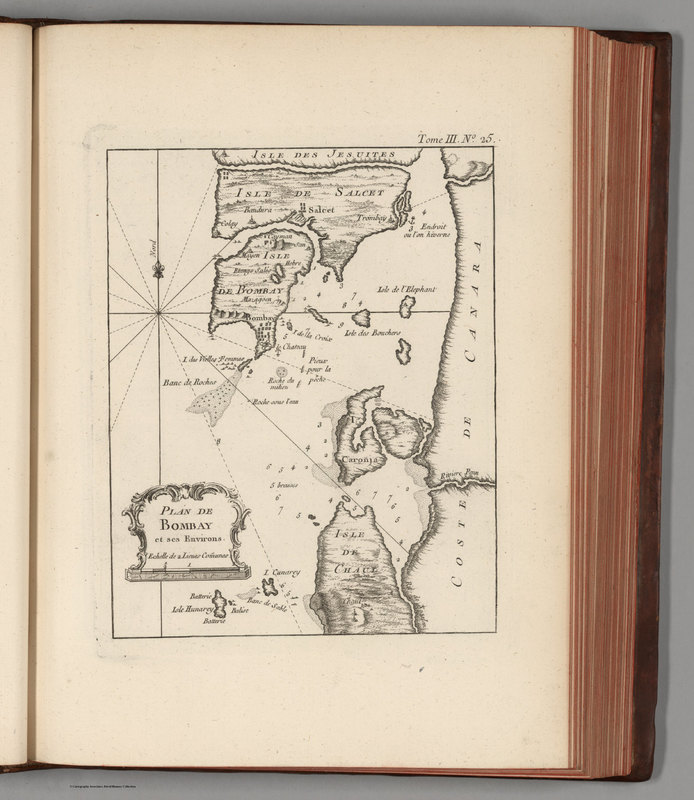
Between 1661-1885, Bombay India was under British rule. Bombay had just come out of Portuguese rule and the power instead of being transferred back to the people of Bombay, was transferred to the leaders of Britain. Like the Portuguese, the British sought to make Bombay an international port city, just not an Indian one. For the British, Bombay would be their jewel of the east, a port to export the finest Asian spices and commodities out of. To do so, they opened the city to everything European, all while suppressing the indian national identity.
One of the primary ways that the British intended to instill its European identity and values onto Bombay was through language. Schools were taught primarily in English, and children learned to love England instead of India. (Varma) British rule and its open welcome to Eurocentric thoughts, meant that the French were an integral part of Bombay life. They visited, explored, traded, both commercial goods and their culture. Just because Britain was the official ruler of India did not mean that France did not have an interest in India. They sent cartographers and traders over and over to the "exotic" land to take back as much as they could as well as spread as much French thought and culture as they could.
The Bellin map "Plan de Bombay" is a French recreation of what Bombay and its surrounding region looks like, with these purposes (shared with the British) in mind: imposing Christianity, anglo-imposition of the name Bombay as opposed to Bombaim or any traditional Indian name prior to Portuguese and British rule, and lastly with resources labelled for export.
Varma, R. "Provincializing the Global City: FROM BOMBAY TO MUMBAI." Social Text22.4 81 (2004): 65-89. Web.