Practicality and Socialization: The Intent of the Çemberlitaş Bathhouse
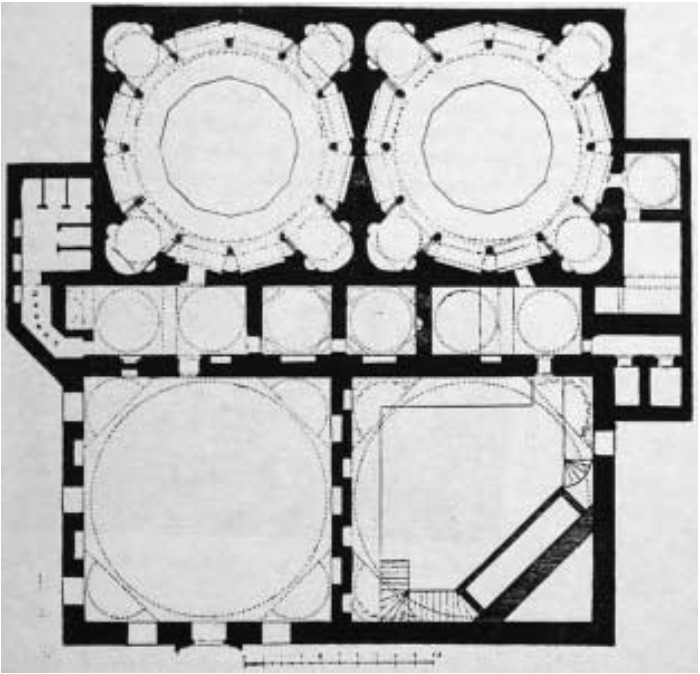
The luxurious Cemberlitas Hamams was originally intended to fulfill a practical spiritual need of cleansing and provide economic support for an associated mosque complex called Atik Valide Kulliyesi. The founder of the mosque complex and inspiration for the bath house creation was Selim II and his wife Nurbanu Sultan, the powerful rulers of the Ottoman Empire in the late sixteenth century. In the Sultan’s view, the bath house would serve as the ideal economic and social addition to the prominent complex which already boasted a primary school, secondary school, higher education religious education institutions, hospital and inn. (1) In accordance to Islamic law, regular cleanliness and washing after impure activities was crucial in living a religious life. (2) There was a constant need to cleanse before prayer, after sexual relations and general hygienic standards in an era without private bathroom conveniences, thus the invention of a multipurpose bath house seemed lucrative.
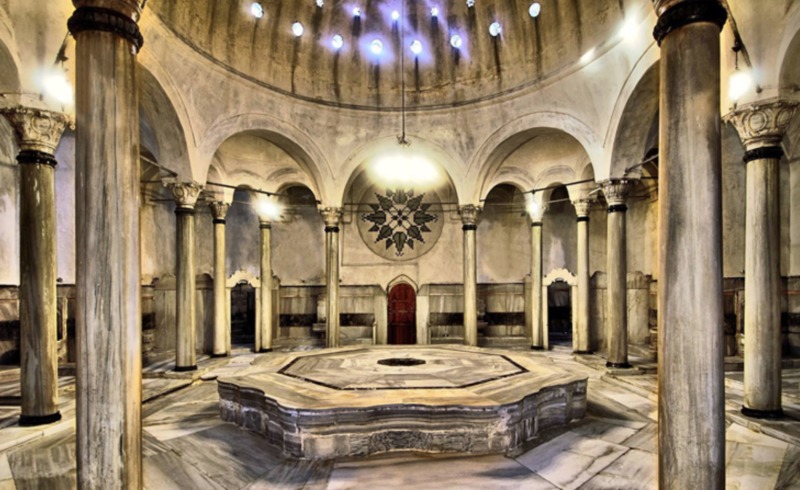
Besides strictly financial concerns, the social intentions and cultural value of the bath house can be noticed by the architecture of the site. The site was constructed under the supervision of architect Miman Sinan, an extraordinarily famous designer of the era and prominent social figure in Istanbulian life. Sinan is known to have created over 300 structures and consulted dozens more, including solicited advice for the construction of St. Peter’s Basicilia alongside painter Michaelangelo(3). Given Sinan’s commission with previous governmental initiatives, he was delegated the responsibility of creating a bathhouse that would adequately fit the spirit of its surrounding complex. The site was originally planned to have two separate entrances for immediate separation of genders. The principal dressing room for each entrance measured 13 meters in length, with a dome shining natural light onto its visitors and ample sitting room throughout. Both gendered systems lead to a large rectangular warm room with three small domes above, and marble basins lining the walls. The middle warming room lead down a corridor to the crowning jewel, the hot room of Cemberlitas for the main act of cleansing. Instead of corners, the decagonal room featured four “niches” and smaller room pockets throughout the walls for privacy. The dividing walls of such niches were constructed to be half height, thus allowing conversation to flow from between the small enclaves if needed. The room was dotted throughout with 12 columns, a style that is reminiscent of infinity and utilized for most Islamic religious buildings. At the center was the marble slab, a heating rock that bathers could lounge on for added relaxation.(4) With small alterations as needed across the centuries, the original architecture of the bathhouse has remained intact to this day.
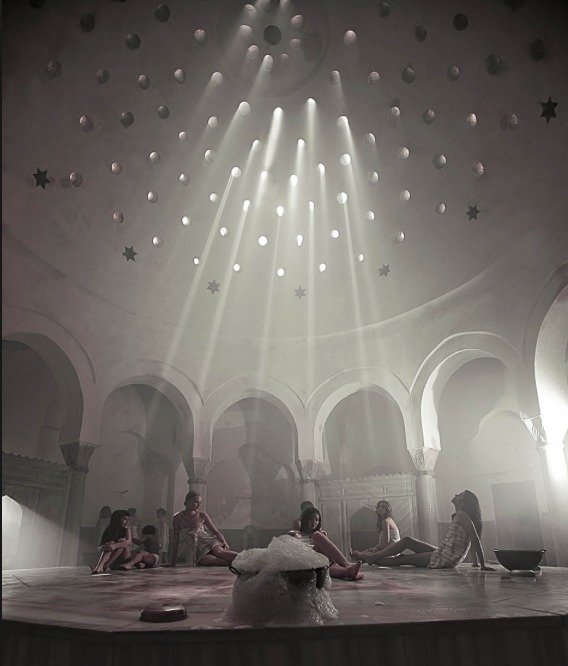
As the Ottoman empire’s top architect, Sinan’s precision of design and powerful notoriety for creating some of the most popular religious buildings at the time provides substantial insights to the thought behind construction. Assessing Cemberlitas hamams original layout uncovers precisely the social needs the building sought to address. Reading the original architectural layout signifies the clear intent. While marked with Islamic architectural trends reminiscent of its religious value, the site’s secondary intent was to provide a social arena that the city could frequent. The enclaves promoted gathering with friends, while simultaneously reducing barriers between enclaves for maximum communication if desired. The open nature of the central heating slab, the core aspect of the core chamber, metaphorically speaks of the open nature of the bathing house. It was a site to frequent for both genders, providing a needed meeting place within the framework of its practical necessity. Thus, for the early parts of its existence, the Cemberlitas bath house existed as a place to create further memories, a base platform for citizens to religiously and socially engage with the community.
(1) Cichocki, Nina. “Continuity and change in Turkish Bathing Culture in Istanbul: The Life Story of the Çemberlitaş Hamam.”Turkish Studies, Vol. 6 No.1 pp. 93-112. 25 Jan, 2007. http://www-tandfonline-com.ezp-prod1.hul.harvard.edu/doi/pdf/10.1080/1468384042000339348?needAccess=true
(2) Ibid., pp.99
(3) Sozen, Metin. “Sinan: Architect of the Ages.” Turkish Ministry of Culture and Tourism. 1988.
(4) Cichocki, Nina. “The Life Story of the Çemberlitaş Hamam: From Bath to Tourist Attraction.”ProQuest Doctoral Dissertations. 2005. http://hollis.harvard.edu/primo_library/libweb/action/display.do?tabs=detailsTab&ct=display&fn=search&doc=TN_proquest305472062&indx=1&recIds=TN_proquest305472062&recIdxs=0&elementId=0&renderMode=poppedOut&displayMode=full&frbrVersion=&frbg=&&vl(51615747UI0)=any&vl(1UI0)=contains&dscnt=0&scp.scps=scope%3A%28HVD_FGDC%29%2Cscope%3A%28HVD%29%2Cscope%3A%28HVD_VIA%29%2Cprimo_central_multiple_fe&tb=t&vid=HVD&mode=Basic&srt=rank&tab=everything&vl(394521272UI1)=all_items&dum=true&vl(freeText0)=Çemberlitas%20Bath&dstmp=1478385709237