Rising Tide: Tourist Perceptions of Mystical Turkey
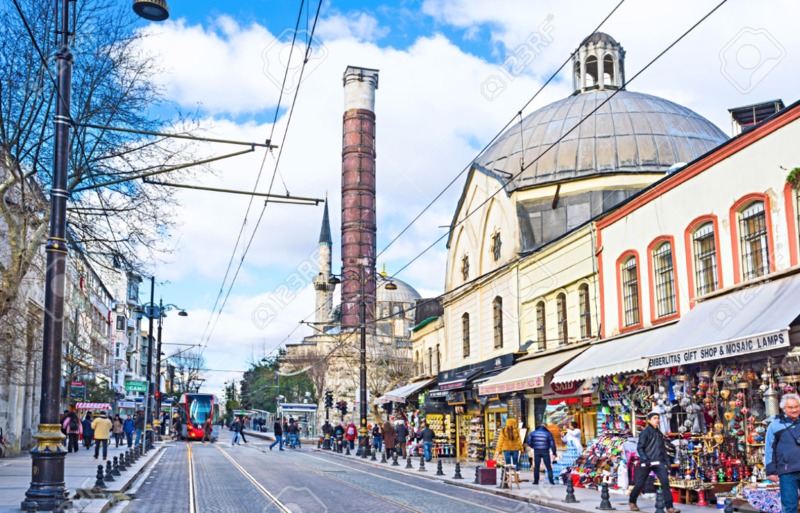
Following the 1970’s, Istanbul saw a rise in tourism attraction to the city correlated with increased transportation technology and ease of traveling. A rather remarkable phenomenon ensued that saved remaining bathhouses like Cemberlitas from economic despair. As tourists began to explore Istanbul and desired to participate in local cultural activities, Turkish bath houses and spas became perceived as a luxury activity. As discussed previously, before the arrival of tourists the visitors of bath houses where those who could not afford private bathrooms. Generally, the communal bathing was a ritual done by the poor and ceased to be viewed in a positive manner. However, as stories of Oriental travel and exotic experiences increased with traveling communications, so to did the notoriety of Cemberlitas. The site had the advantage of being the oldest remaining bath house and the localization of the popular Danyolou street made easily accessible to visitors. The result was a surge in foreign usage, inspiring the reconstruction of the women’s bathing area in 1988. (1) Local business that sought monetary reward from the wave of popularity began marketing bath house experiences as “mystic” and spiritual.
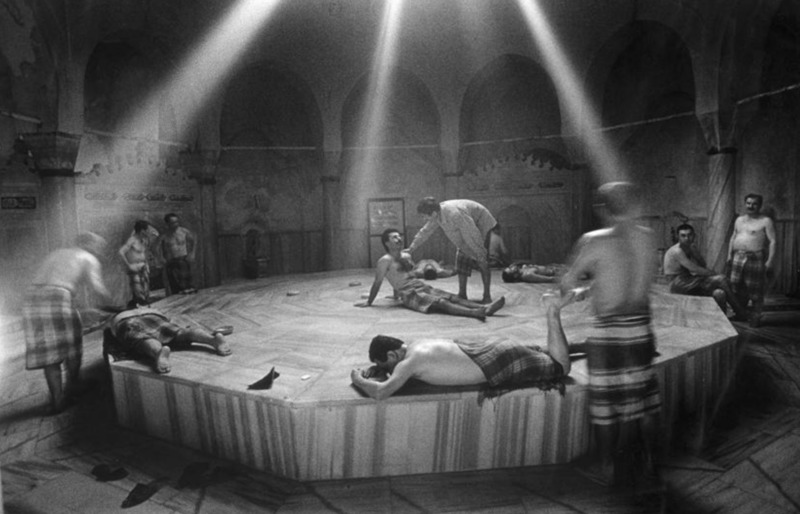
What is unusual is the local perception of the site that has fluctuated in correlation with tourism. The current website of Cemberlitas boasts of a mystical excursion, the embodiment of “the land of fairy tales.” (2) While many locals saw through the veneer of commercialization, Turkish baths and in particular Cemberlitas became a phenomenon that was socially embraced as a remembrance of the Ottoman past. As shut out as it could have been by progressive urban planners, economic pressure pushed Ottoman Empire bathing to become one of the most valued assets of the city’s identity. Historians often point to “auto-ethnography” as the main culprit behind the transformation of public ambivalence to embrace of Turkish baths. As those who were at least socially colonized by the West, the term eloquently points to the following rationale: the colonized, through their efforts to progress, engage with their own culture through the eyes of the colonizer (3). Seeking to fully embody the West has resulted in viewing Istanbullian culture through the very eyes of the West, even if it meant embracing a trend that was previously remembered with shame. Thus Western tourists’ desire to tap into a certain historical narrative and certain (previously absent) positive memory of Turkish baths, have reshaped the current living memory of Cemberlitas hamam.
1. Cichocki, Nina. “Continuity and change in Turkish Bathing Culture in Istanbul: The Life Story of the Çemberlitaş Hamam.”Turkish Studies, Vol. 6 No.1 pp. 93-112. 25 Jan, 2007. http://www-tandfonline-com.ezp-prod1.hul.harvard.edu/doi/pdf/10.1080/1468384042000339348?needAccess=true
2. “Çemberlitaş Hamam.” Cemberlitas Hamam. http://www.cemberlitashamami.com/index.php?dil=en
3. 1. Cichocki, Nina. “Continuity and change in Turkish Bathing Culture in Istanbul: The Life Story of the Çemberlitaş Hamam.”Turkish Studies, Vol. 6 No.1 pp. 93-112. 25 Jan, 2007. http://www-tandfonline-com.ezp-prod1.hul.harvard.edu/doi/pdf/10.1080/1468384042000339348?needAccess=true