Selective Remembrance: The Early Turkish Republic
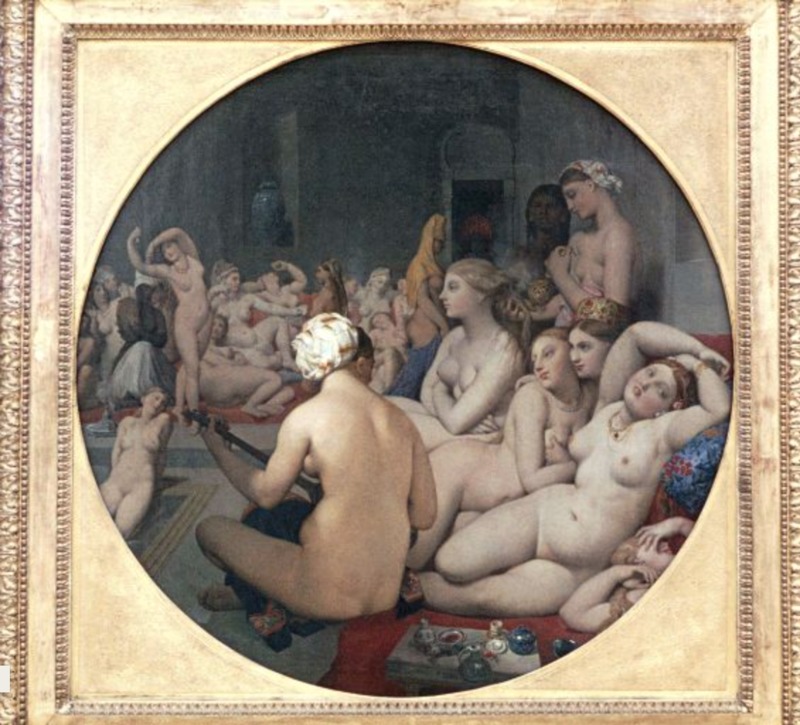
As with any newly founded nation-state, the Early Turkish republic sought to establish a claim of historicity and authenticity. Formally declared a republic in 1923, the Turkish independent government was at the brink of collapse. The immense casualties of the first world war and the destabilization of Eastern Europe followed by the Ottoman Empire’s dissolve gave the republic extraordinarily difficult circumstances to overcome as it formed its nation. (1) Economic flux resulting from the creation of the state forced many local businesses to close, including the management of public bathing houses that were seeing declining popularity. As previously mentioned, the crux of Turkish identity that the state sought to embody was tied to Byzantine and Ancient Classical roots. With the advent of the nation state, a rallying identity was more crucial than ever before and a claim to progressiveness increasingly became state rhetoric. (2) Outside of bathhouses, the republic separated Islam in its political affairs, encouraged male European dress and extended women’s voting rights.(3) Thus, amidst such political and economic pressures to Westernize, bathing houses saw the strongest wave of closures the city had seen yet: only 20 of the bathing places were in use by 1939.
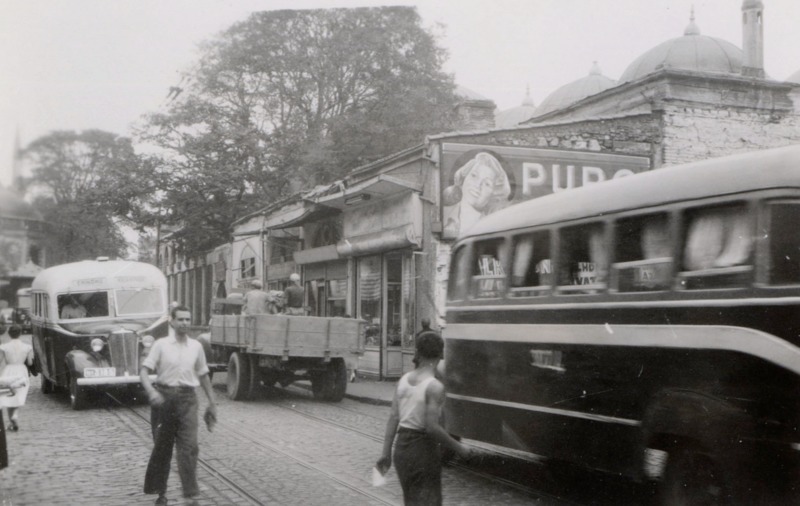
The coupling of induced selective memory with nationalism and a rise in living comforts resulted in a further distancing from Ottoman bath houses. Cemberlitas, as with many other bathhouses, faced the backlash of changing cultural perception of their usefulness. It stood at odds with the desired picture the nation wished to present, separate from the religious mosques the nation heavily identified with and inferior to the rise of in-house bathroom luxury. The rise of movie theaters and other publically funded social arenas stood in fierce competition of the bath’s social importance. (4) At the turn of the 1950’s, bathhouses embodied the lieux de memorie concept of “no longer life but not yet death, like shells on the shore when the sea of living memory has receded.” Historians point to why Cemberlitas was able to withstand the tide of public opinion as attributable to its previous architectural concession in the 1830’s road commission project. (5) The proximity to the already expanded Danyolou street saved the site from being considered for demolition by the Republic urban planners, able to withstand the darkest period for Turkish bath house until a new revitalizing consumer force: international tourists.
(1) “Turkish Studies- Republic of Turkey: A Brief History.”University of Michigan. 2015. http://www.umich.edu/~turkish/links/reptr_brhist.html
(2) Cichocki, Nina. “Continuity and change in Turkish Bathing Culture in Istanbul: The Life Story of the Çemberlitaş Hamam.”Turkish Studies, Vol. 6 No.1 pp. 93-112. 25 Jan, 2007. http://www-tandfonline-com.ezp-prod1.hul.harvard.edu/doi/pdf/10.1080/1468384042000339348?needAccess=true
(3) “History and Culture of Turkey: From Anatolian Civilization to Modern Republic.” Chatham Unviersity Global Focus. 2010. https://www.chatham.edu/academics/globalfocus/archives/turkey_1011/_pdf/history_culture.pdf
(4) Cichocki, Nina. “Continuity and change in Turkish Bathing Culture in Istanbul: The Life Story of the Çemberlitaş Hamam.”Turkish Studies, Vol. 6 No.1 pp. 93-112. 25 Jan, 2007. http://www-tandfonline-com.ezp-prod1.hul.harvard.edu/doi/pdf/10.1080/1468384042000339348?needAccess=true
(5) Ibid. pp 106.