Tribute to the Founders and the Organ Era
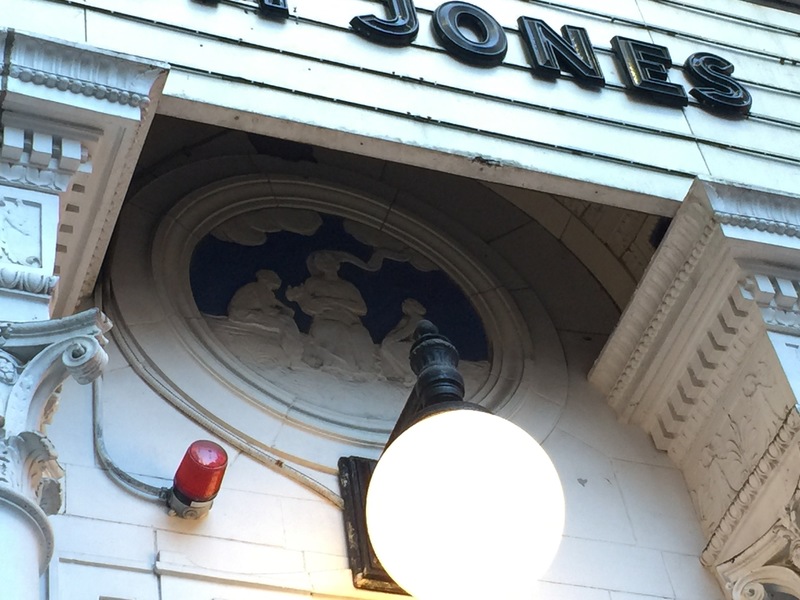
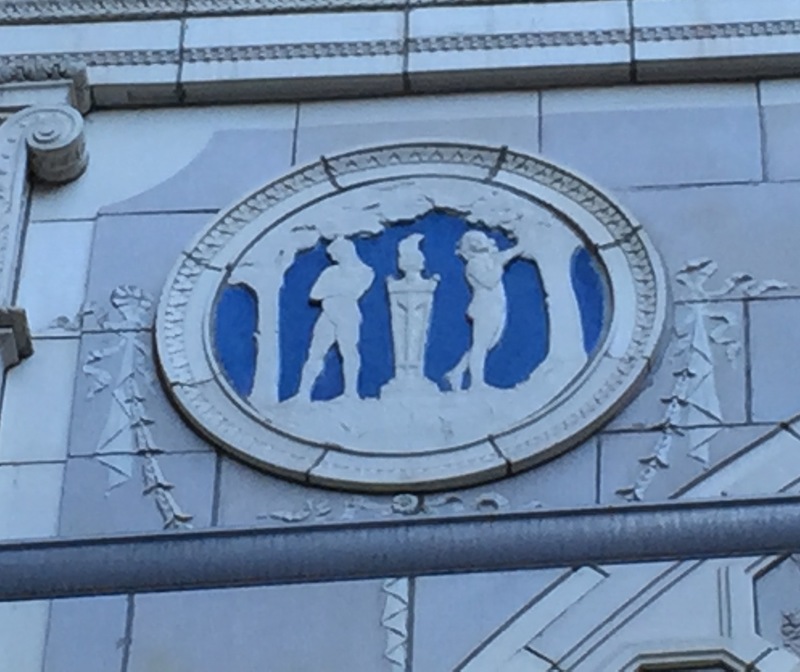
Coming closer to the entrance, the modern day facade comes into view, featuring two short columns sustaining the title “Orpheum Theatre” with the singular “Tom Jones, Sept 23” announcement pinned below. The title is hugged by a small arch and rectangular overhang. The granite facade is shorter than the building itself, thus it is surrounded by brown brick wall twice its size with a orange spray painted sign “The Corner Mall." On either sides of the entrance are bulletin notices of the next rock and hip hop artists to visit the theater. It takes a detailed eye to see the traces of its early founding amidst the contemporary flashy advertisements around its exterior. The first noticeable artwork is a series of three subtle circular artworks in blue and ivory decor. The first is nestled under the large Orpheum sign above the main entrance. It is of a mother holding a baby and connected to the sky, surrounded by children eagerly listening to her speak. Perhaps this is a religious reference to the nearby church, reflecting the religiosity of its surroundings mentioned previously. The second and perhaps more interesting shows Adam and Eve on either sides of the Harvard Musical Association seal, the founders of humanity and of the Hall respectively.
The idea of a large, multipurpose music hall arose at the height of the 1850’s Bostonian “musical growth spurt”, an era of heightened interest in musical symphonies. The project was headed by notorious Boston Brahmin’s pertaining to the Harvard Musical Association, including President J.B. Upham, Jonas Chickering, and George Derby. These men held a campaign for the “liberal patronage” of fellow Bostonians to enhance the experience of fine arts and literature performance. Completed in 1853, the Boston Music Hall (now called the Orpheum Theater) was built by architect George Snell as a great feat of acoustic architecture.
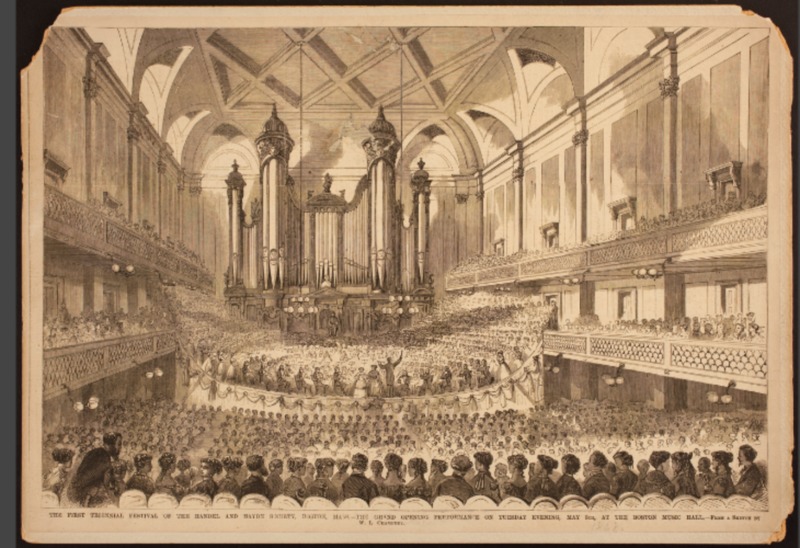
The hall was created with performance and luxury in mind, the main hall adored with “blue and white moron upholstered chairs, with white ivory numbering tabs at their tops, providing a seating capacity of 2,585." The blue and white ivory of the artwork in fact is identical to the original color scheme of the theater. The crown of all performance jewels was organ music. J.B. Upham was determined at all costs to endow the Music Hall with the country’s finest organ, a luxury of musical pieces at the time. Through the tumultuous American Civil War which drove building costs substantially higher, dangerous shipment overseas and a year long installation, the creme of the creme German organ was installed in the hall. For the decade to come, the Boston Music Hall was the apple of Boston’s elite eye. Scheduled recitals filled Wednesdays and Saturdays, with intermittent concerts of other society’s throughout the week. The Hall was consistently the talk of the town and remained so until society’s inevitable shift to newer forms of artwork, forcing the hall to confront the “closed space” constraints of its location and purpose.