Introduction
"The Theater has, for this reason, served all three of us [prominent urban theorists], as a vehicle for understanding behavior in public, an anthropological method which compares expression on stage and street...The claims of public culture, however tagged, are straightforward: engaging in expressive behavior is one of the ways in which where we live matters to us."
- Richard Sennett, The Public Realm
If there is any one singular expression of humanity’s deepest philosophical inquiries, guilty pleasures or whimsical imaginative desires, it is the art forms of entertainment. The characters that singers and actors take on showcase the hardships we most dread, the most miraculous of circumstances we could desire and the culture the performers live in. Geishas of dainty mannerisms and service-oriented entertainment personified the patriarchal culture of 18th century aristocratic Japan. The musical genre of blues originated in the American deep south, notorious for its swing and chime reminiscent of its slave song roots. It is through the lens of theatrical and also of musical performance that we can understand what society values and desires at any given era.
Venues of entertainment are a unique site to examine in urban studies precisely for their ability (or in some cases, inability) to cope with the constant change associated with societal tastes and cultural fads. The artistic exhibitions they host constantly morph as a function of societal preferences for entertainment, thus there is a heightened need for the venue to be acutely responsive to the demands of city dwellers. The very success of entertainment venues depends on its ability to be repurposed and redefined on a moment’s notice, renovated to adapt to the ever changing expressions of society’s multifarious artistic preferences. In reference to Sennett’s urban space theory, artistic venues inhabit a peculiar position in the spectrum of openness and closure: despite its brick and mortar enclosed restrictions, the successful theater must personify the traits of an “open, membrane” space able to mold to dynamic changes in artistry. Entertainment venues that withstand the length of time must either structurally change, torn down and rebuilt, or be designed in such a way that it is “incomplete” allowing for physical expansion.

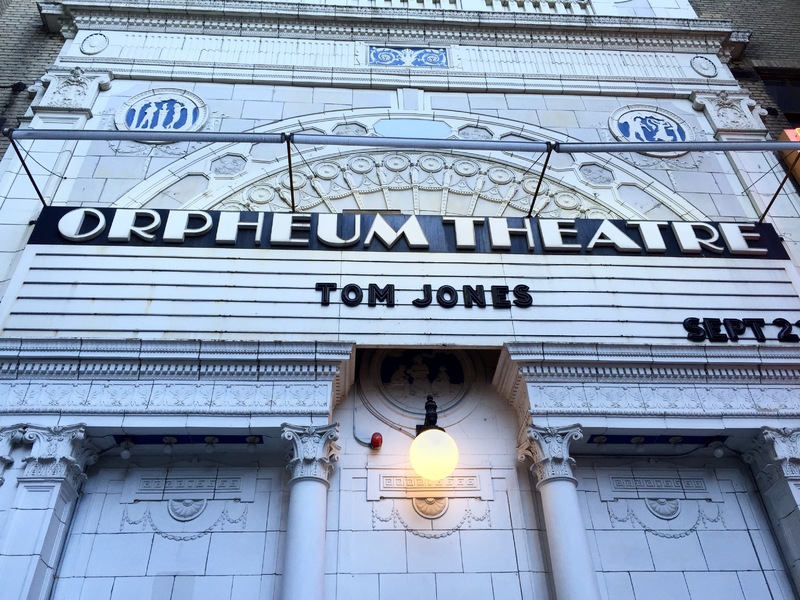
Boston’s renown Orpheum Theater has proven to take a creative twist with these traditional definitions of urban spaces. Due to its location space constraints, it's needed to readjust its purpose within the physical limits it was constructed with. The theater as we know it today exists as a completely repurposed Boston Music Hall originally built in 1852. Since its inception, the hall (or theater depending on the era) has undergone significant changes in functionality, management and even appearance. It is now the home of world famous rock bands like Grateful Dead and Andy Grammar, a radical departure from the classical orchestra performances of its origins. The Orpheum Theater is a perfect example of an adaptable “grey” space, a reusable palimpsest of historical layers over time. If one looks close enough and reads the site with great detail, one can parcel out snippets of its majestic past and traces of its creative reuse over decades.