The Theater as a "Grey" Space
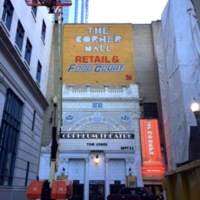
When leaving the theater, the final impression one obtains is one of constant renewal. The majestic blue and ivory artworks, tributes to the theater’s glorious past, clashes with the tacky spray painted orange sign above advertising the Corner Mall. During my visit, the narrow street entrance was occupied by construction trucks and extension platforms renovating the brick above the marble facade. While it may seem like the tension between today’s musical shows and the early opera origins of this building is sharp, these different eras of popular culture are simply the newest repurposed layers that make this theatre so legendary in Boston. This building has withstood time. It is often difficult to think of brick and mortar buildings as being flexible, but the sheer ability to stand for over two centuries long speaks to the site’s ability to mold to its inhabitants. The very name we use now is a reflection of the theater’s ability to defy Sennett’s black and white definitions of open versus closed space: the Orpheum Theater (no longer the Boston Music Hall) has been able to withstand the centuries and establish itself as an ever-changing “grey” space.
Works Cited:
Ed Sampson, “The Boston Music Hall: From Then… To Now.” A Timeline History for the Original Home of the Great Organ. (2015)
Harvard Music Association, “Boston Music Hall and the Great Organ.” (2012)
Crossroad Presents, “About: Boston Orpheum Theater.” (2016)
Richard Sennett, “The Public Realm.” Blackwell City Reader.