Introduction
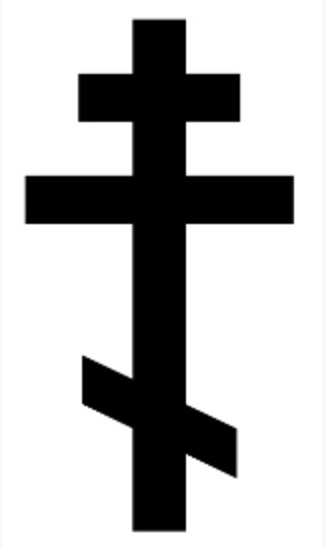
From its establishment in 1448, the Russian Orthodox Church has played an unmistakable role in the artistic and cultural development of Moscow. For much of the monarchy, the church was heavily intertwined with the political and social affairs of the country. Despite significant influence, in 1917, after Tsar Nicholas II abdicated the throne, the communist government withdrew its support from the church and declared a separation of church and state (1). Viewing the church as a threat to secular, communist ideology, the government discouraged religious influences, demolished Orthodox monuments and churches, and ultimately, limited the power of religion in Russian society. After the fall of the communist government in 1991, the Orthodox Church began to regain prominence in society – for many, the church was believed to “fill the ideological vacuum left by the end of communism” (2). Most recently, Moscow has launched several initiatives to reconstruct and expand the number of churches in the city (3).
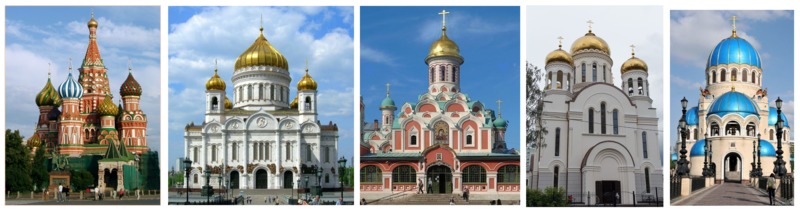
This tour will travel through 5 churches across Moscow, highlighting the significance of Post-Soviet Russian Orthodox churches. We will start on the Red Square with Saint Basil’s Cathedral, one of the earliest landmarks in the country and a pioneer of Russian orthodox architecture. As the only pre-Soviet church on this tour, Saint Basil’s Cathedral will be used to represent the stereotypical artistic features of the Russian Orthodox Church. We will then move on to Kazan Cathedral and the Cathedral of Christ the Savior, churches reconstructed after the fall of the Soviet Union. The last two stops on the tour will be Church of the Righteous John the Russian and Church of the Holy Trinity at the Borisovo Ponds, two new churches located in Moscow’s suburbs and constructed under the 200 Churches Program. Collectively, these structures will reflect the dynamic role that the political and social institutions have had in the architectural and religious components of the Russian Orthodox Church.
1) "Russian Orthodox Church." Encyclopedia Britannica Online. Encyclopedia Britannica, 22 June 2016. Web. 23 Oct. 2016.
2) Clover, Charles. "Russia's Church Mourns Patriarch." Financial Times. N.p., 05 Dec. 2008. Web. 23 Oct. 2016.
3) Vasílieva, Anna. "200 New Orthodox Churches in Moscow." Russia Beyond The Headlines. N.p., 26 Mar. 2013. Web. 23 Oct. 2016.